
Core Service
Mold Inspection & Moisture Assessment
Free mold inspections with moisture readings, thermal imaging, and written scopes from Mold Men across Louisville, Southern Indiana, and Owensboro.
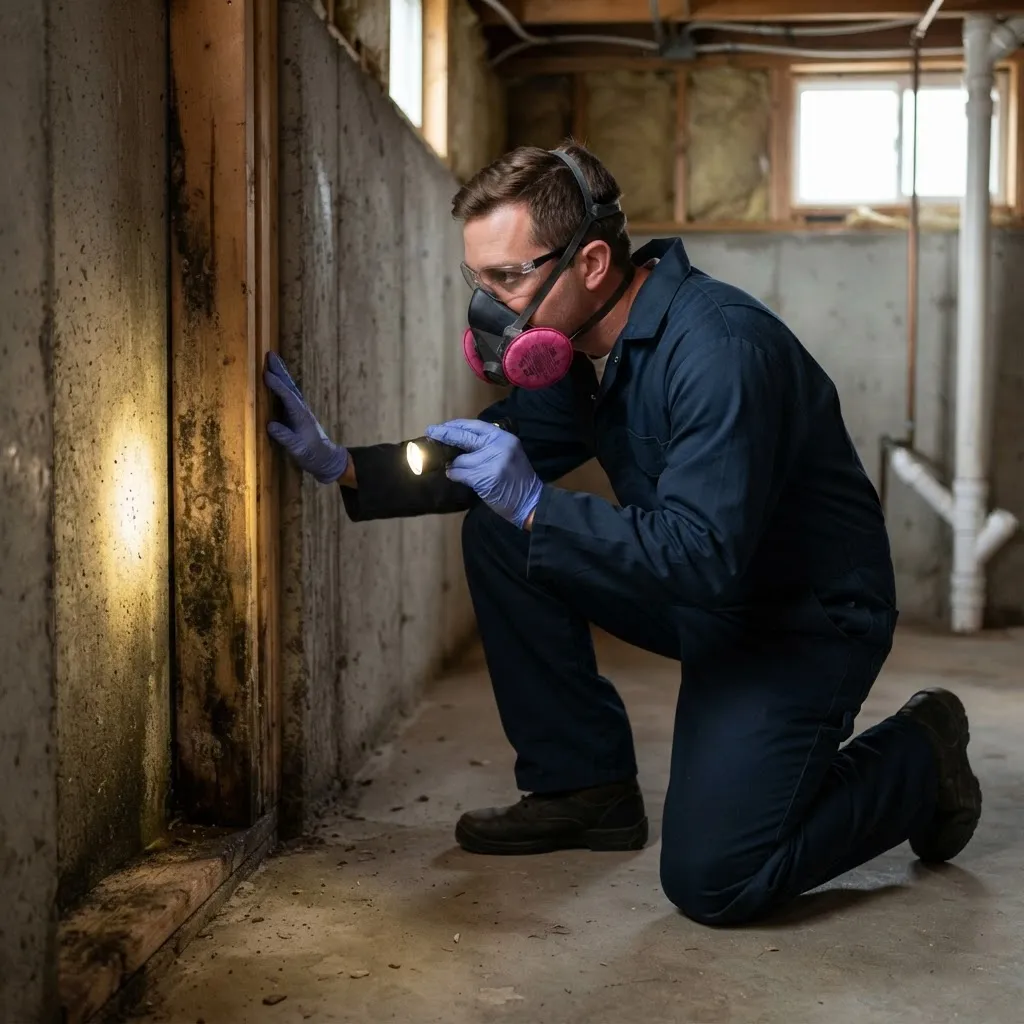
A clear, careful process from inspection to finished work
A Mold Men inspection is designed to answer two practical questions: where is the moisture coming from, and what needs to happen next? We combine a visual assessment with moisture readings and thermal imaging to identify visible mold concerns, hidden moisture patterns, and building conditions that may be supporting growth. When laboratory sampling is useful, it can be coordinated through an independent third party rather than graded by the company doing the repair work.
- Full visual inspection of basements, crawl spaces, attics, and living areas
- Thermal imaging and moisture meters to trace hidden moisture patterns
- Independent third-party lab testing available, coordinated separately
- Written scope with photos and a clear next step — no obligation to book
Start with a few details
Get a free quote for your property
Tell us your name, phone, and city. We'll follow up with the right next step.
Moisture-Focused Assessment
We do not stop at a stain or musty smell. The inspection looks for leaks, condensation, humidity, drainage, crawl-space moisture, and other conditions that can keep a mold problem active.
Thermal Imaging + Meters
Thermal imaging helps locate temperature anomalies that may indicate moisture, while moisture meters help confirm what is actually wet. The tools guide the investigation; they do not replace visual judgment.
Clear Written Scope
When work is recommended, the findings are translated into a practical written scope that explains the affected area, likely source, access needs, and the next step instead of a vague treatment recommendation.
Independent Testing Option
Air or surface sampling is not automatically necessary on every property. When testing makes sense, Mold Men can coordinate independent third-party sampling so laboratory results remain separate from the contractor performing the work.
When You May Need a Mold Inspection
An inspection is most useful when there is a visible concern, a moisture event, or a persistent building condition that has not been explained. It is also a good starting point before committing to a larger repair.
Visible Growth or Staining
Dark spotting, fuzzy growth, recurring discoloration, or staining on drywall, framing, ceilings, or stored contents deserves a closer look, especially when the material keeps returning after cleaning.
Musty Odor With No Clear Source
A persistent musty smell can point to damp materials in a wall cavity, crawl space, basement, attic, or HVAC-adjacent area. The goal is to trace the moisture pattern instead of masking the odor.
Recent or Repeated Water Intrusion
Roof leaks, plumbing failures, wet basements, appliance leaks, and storm water can leave materials damp after the visible water is gone. Moisture readings help determine what still needs attention.
Wet Crawl Space or Basement
Standing water, torn vapor barrier, damp joists, condensation, efflorescence, or high humidity can create conditions that support mold. The inspection helps determine whether Crawl Space Encapsulation or another moisture correction is appropriate.
What Is Included
The exact inspection is adapted to the property, but a standard Mold Men assessment is built around accessible conditions, moisture behavior, and a clear explanation of next steps.
Conversation about what you are seeing, smelling, or experiencing and any recent leaks, floods, renovations, or HVAC changes.
Visual inspection of accessible affected areas and likely moisture sources, including basements, crawl spaces, attics, bathrooms, laundry areas, and other problem zones as relevant.
Moisture readings on suspect materials and comparative readings where they help define the extent of a wet area.
Thermal imaging used to identify temperature patterns that may justify additional moisture checks or closer inspection.
Assessment of drainage, humidity, ventilation, condensation, plumbing, and building conditions that may be contributing to the problem.
Photo documentation and a written scope or recommendation when corrective work is needed.
Optional coordination of independent third-party laboratory testing when sampling is appropriate or requested.
Our Process
The inspection should make the next decision easier, not create another layer of uncertainty. Our process moves from the complaint to the likely source and then to a written plan.
- 1
Start with the concern. We ask where the issue was first noticed, whether it changes with weather or HVAC use, and whether there has been a known leak or water event.
- 2
Walk the affected areas. We look for visible growth, staining, material damage, condensation, ventilation problems, and access limitations.
- 3
Check moisture conditions. Moisture meters and a hygrometer help distinguish a dry old stain from an active moisture problem.
- 4
Use thermal imaging where it adds value. Temperature anomalies can help identify places that deserve a direct moisture check; a thermal camera does not independently identify mold.
- 5
Trace the likely source. The inspection considers plumbing, exterior drainage, foundation seepage, roof leaks, crawl-space vapor, HVAC condensation, and indoor humidity.
- 6
Define the next step. If the issue is limited and dry, monitoring or a small repair may be enough. If affected material needs removal, the next step may be Mold Remediation.
- 7
Document the recommendation. When work is needed, we provide a clear scope so you know what is included before scheduling.
How Mold Inspection Tools Should Be Used
Meters and cameras are useful because they help narrow the investigation. They are not magic mold detectors, and the page should make that distinction clear.
Thermal Imaging
A thermal camera shows surface-temperature differences. Those differences can be caused by moisture, missing insulation, air leakage, sun exposure, or other conditions, so suspicious areas are verified with direct inspection and moisture readings.
Moisture Readings
Moisture meters help compare suspect materials with surrounding dry materials and can show whether a leak or wet assembly may still be active. Readings are interpreted in context rather than treated as a diagnosis by themselves.
Visual Evidence
Visible growth, water staining, deterioration, condensation, and damaged porous materials often provide the most useful information. The inspection documents what can actually be seen and what additional access may be required.
Independent Sampling
Testing can be useful when the source is unclear, a third-party record is needed, or a customer wants laboratory information. Mold Men does not make every project dependent on testing when the condition is visible and the moisture source is clear.
Pricing and Cost Factors
Mold Men currently offers free on-site inspections and quotes. Independent laboratory testing, if requested or recommended, is separate and any lab-related cost should be communicated before samples are collected.
Property size and the number of affected areas can change how long the assessment takes.
Access matters: finished basements, low crawl spaces, packed storage areas, and tall attics may require more time or additional preparation.
Independent testing, destructive investigation, specialty access, or other services outside the standard inspection should be discussed before they are performed.
If stored contents prevent access, Junk Removal may need to happen before the structure can be fully evaluated.
Timing and Scheduling
Many residential inspections can be completed in a single visit, but the time depends on property size, access, and how many areas need to be investigated. Laboratory results, when testing is used, follow the independent lab's turnaround time rather than the inspection visit itself.
Why Mold Men
The value of an inspection is not the number of tools used. It is whether the inspection gives you a reliable path from symptom to source to solution.
Source Before Treatment
Cleaning visible growth without correcting the water problem is temporary. We focus on the moisture source first so recommendations address why the condition developed.
Clear Scope Before Work
If corrective work is recommended, you should know what materials are affected, what access is needed, and what the proposed work includes before a crew starts.
Independent Lab Option
When testing is useful, using an independent third party separates the laboratory result from the contractor's financial interest in the repair scope.
One Team for Next Steps
If the inspection uncovers a larger issue, Mold Men can also handle Mold Remediation, Crawl Space Encapsulation, and related property cleanout work when those services are actually needed.
Related Mold Men Services
An inspection often sits at the front of a larger property problem. These services are commonly connected when the inspection identifies conditions that need correction.
- Mold Remediation — for affected materials that need controlled removal, cleaning, containment, and source correction.
- Crawl Space Encapsulation — for persistent ground moisture, failed vapor barriers, or humid crawl-space conditions after active water and mold issues are addressed.
- Mold Removal — visit the main Mold Men page for an overview of our mold-focused services and service area.
Areas We Serve
Mold Men serves homeowners, landlords, property managers, and businesses across Louisville, KY, New Albany, IN, Jeffersonville, IN, and Owensboro, KY. Louisville and Southern Indiana are part of our regular metro service area; Owensboro work is scheduled with a confirmed crew day and arrival window.
Frequently Asked Questions
Do I need a mold test before remediation?
Not always. When mold is visibly present and the moisture source is clear, a professional can often define the corrective scope without making laboratory sampling the first step. Testing can still be useful when conditions are unclear, a third-party record is needed, or you specifically want laboratory data.
Does thermal imaging show mold inside the wall?
No. Thermal imaging shows surface-temperature differences. Those patterns may point to moisture or insulation conditions that deserve a closer look, but suspicious areas still need to be verified through direct inspection and moisture readings.
What happens if you find mold?
If affected material needs professional correction, we explain the scope and next step. That may include Mold Remediation, moisture-source repair, drying, or Crawl Space Encapsulation depending on what is driving the problem.
Can you inspect a crawl space or attic?
Yes, when the area is safely accessible. Low clearance, standing water, damaged access, heavy storage, or structural concerns can limit how far an inspector can enter until the obstruction or hazard is corrected.
What if stored contents are blocking the area?
We can usually inspect what is accessible and explain what still needs to be exposed. If a basement, attic, garage, or crawl-space access is heavily blocked, Junk Removal can be coordinated before the final structural assessment.
Do you serve Southern Indiana and Owensboro?
Yes. Mold Men serves Louisville, KY, New Albany, IN, Jeffersonville, IN, and Owensboro, KY, with Owensboro visits scheduled on confirmed crew days.
Schedule a Mold Inspection
If you have visible growth, a recurring musty odor, a wet crawl space, or a water problem you cannot explain, start with the source. Mold Men will inspect the accessible conditions, document what we find, and explain the next step without padding the scope.