
Core Service
Mold Remediation & Mold Removal
Professional mold remediation with containment, HEPA filtration, source correction, and clear written scopes across Louisville and surrounding service areas.
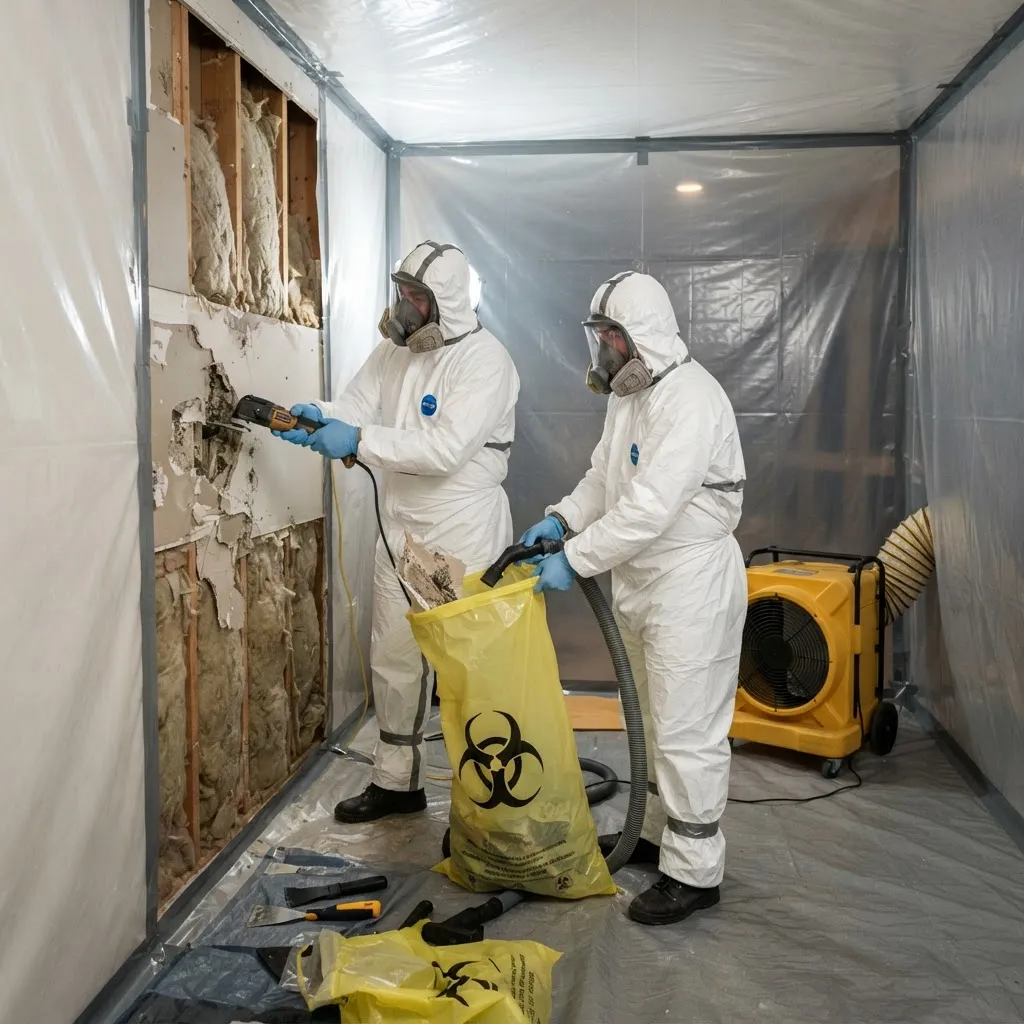
A clear, careful process from inspection to finished work
Professional remediation is more than spraying a visible spot. Mold Men isolates the affected work area, removes materials that cannot be reliably cleaned, HEPA-cleans appropriate surfaces, controls airborne debris, and addresses the moisture condition that allowed growth in the first place. Our approach follows the practical framework of the ANSI/IICRC S520 standard and is built around a written scope before work begins.
- Containment, negative air, and HEPA filtration during controlled work
- Material-specific decisions on what is removed versus cleaned
- Moisture-source correction so remediation is not a temporary fix
- Written scope and closeout documentation on every project
Start with a few details
Get a free quote for your property
Tell us your name, phone, and city. We'll follow up with the right next step.
Controlled Work Area
Containment keeps demolition dust and disturbed material separated from unaffected parts of the property. Negative air and HEPA filtration are used when the scope calls for them.
Material-Specific Removal
Porous materials with significant growth or water damage may need removal, while appropriate structural materials can often be cleaned. The scope explains which materials stay and which leave.
Moisture Source Correction
Remediation without moisture correction is temporary. We trace the leak, condensation, drainage, humidity, or crawl-space condition that allowed the problem to develop.
Written Scope + Documentation
You receive a defined scope before the project begins and project documentation at closeout. Qualifying remediation work may also carry Mold Men's under the applicable terms.
When Mold Remediation May Be Needed
Remediation is appropriate when affected materials need controlled removal or cleaning and the problem is larger than routine household surface maintenance.
Visible Growth on Building Materials
Growth on drywall, insulation, framing, subfloor, sheathing, or other building materials may require controlled removal or cleaning based on material type, extent, and moisture history.
Recurring Mold After Cleaning
If spotting repeatedly returns, there is usually a moisture condition that has not been corrected. The project should address the source instead of repeatedly treating the visible symptom.
Water-Damaged Porous Materials
Drywall, insulation, carpet pad, ceiling tile, and similar porous materials can be difficult to restore after prolonged wetting and contamination. The written scope identifies what can be cleaned and what should be removed.
Mold Exposed During a Cleanout
Junk Removal or a Hoard Cleanup can uncover hidden wall, floor, or crawl-space conditions. Once the structure is accessible, remediation can be scoped around what is actually present.
What Is Included
Every project is scoped to the affected area rather than sold as a one-size-fits-all treatment. A remediation plan may include the following components when they are appropriate to the property.
Pre-work review of the affected area and confirmation of the written scope.
Protection of finished surfaces and setup of a controlled work path from the affected area to the exterior.
Containment barriers and negative-air control where needed to limit cross-contamination.
HEPA-filtered air scrubbing and HEPA vacuuming as appropriate to the scope.
Removal and bagging of affected porous materials that cannot be reliably cleaned.
Cleaning of suitable remaining structural materials using HEPA methods and other appropriate surface-cleaning techniques.
Use of EPA-registered antimicrobial products according to label directions where appropriate to the material and scope.
Removal of debris and contaminated waste through the controlled work path.
Moisture-source correction or written recommendations for the repair needed to prevent recurrence.
Photo documentation, moisture readings where relevant, and support for independent post-remediation verification when requested.
Our Process
The project should move in a controlled sequence so that demolition does not spread debris and cleaning does not happen before the moisture source is understood.
- 1
Confirm the scope. We review the affected materials, work area, access, contents, moisture source, and any testing or documentation already available.
- 2
Prepare and protect. Finished floors, stairs, doorways, and unaffected areas are protected before removal begins.
- 3
Establish containment. Barriers, controlled entry, negative air, and HEPA filtration are installed where the scope requires them.
- 4
Remove unsalvageable affected material. Porous materials that cannot be reliably restored are removed in a controlled manner and contained for disposal.
- 5
Clean what remains. Appropriate structural surfaces are HEPA-vacuumed and cleaned, with EPA-registered antimicrobial products used according to label directions where they are part of the scope.
- 6
Dry and correct the source. Plumbing, drainage, humidity, roof, HVAC, or crawl-space conditions are corrected or clearly identified for correction before the project is considered complete.
- 7
Verify and document. The work area is cleaned, documented, and walked through with the customer. Independent clearance or laboratory verification can be coordinated when it is appropriate or requested.
What Professional Mold Remediation Is Designed to Control
The technical goal is not to promise a sterile building. It is to remove affected material, clean appropriate surfaces, control cross-contamination, and return the area to a normal, dry condition.
Containment + Negative Air
Containment limits the path between the work zone and clean areas. Negative pressure can be used to encourage air to move into the contained space rather than pushing disturbed particles out into the property.
HEPA Filtration
HEPA-filtered air scrubbers and vacuums capture fine particles during and after controlled removal. Filtration supports source removal; it is not a substitute for removing damaged material or fixing moisture.
Remove vs. Clean
Drywall, insulation, carpet pad, and other porous materials may require removal when significantly affected. Sound structural wood and other appropriate materials can often be cleaned when the source has been corrected.
IICRC S520 Framework
The ANSI/IICRC S520 standard provides an industry framework for professional mold remediation. The actual project still depends on affected material, building conditions, access, moisture, and the written scope.
Pricing and Cost Factors
Mold remediation should be priced from a defined scope, not from a photograph of one visible spot. Mold Men provides a written quote after the affected area and moisture conditions have been assessed.
Square footage and the number of affected rooms or building assemblies.
Material type and how much porous material must be removed rather than cleaned.
Containment complexity, occupied-space protection, and the distance from the work zone to the exterior.
Access limitations such as low crawl spaces, attics, stairways, finished basements, or packed storage areas.
Drying, dehumidification, drainage, plumbing, or other moisture-source corrections required for a lasting repair.
Contents handling or Junk Removal needed before the affected structure can be reached.
Independent testing or post-remediation verification requested outside the remediation scope.
Timing and Scheduling
A small, accessible remediation project may require far less time than a basement, attic, multi-room loss, or crawl-space project with active water. Scheduling and duration depend on containment, demolition, drying, access, and source correction. We define the expected sequence in the scope rather than promising that every project will fit the same timeline.
Why Mold Men
The strongest remediation plan is specific about materials, containment, source correction, and what happens after the visible growth is gone.
Inspect Before You Remove
A good scope starts with the affected materials and the moisture source. If the cause has not been identified, a Mold Inspection should come before demolition.
No Spray-and-Pray Scope
We do not treat remediation as a coating job. The project is built around source removal, cleaning, containment, and moisture correction appropriate to the material.
Integrated Moisture Solutions
If ground moisture is feeding the problem, remediation can be followed by Crawl Space Encapsulation, drainage, vapor control, or dehumidification as appropriate.
Clear Closeout
Project photos, moisture observations, disposal documentation where applicable, and support for independent verification give the customer a record of what was actually completed.
Related Mold Men Services
Mold problems often cross service lines. The following pages explain the steps that commonly happen before or after remediation.
- Mold Inspection — for locating visible concerns, tracing moisture, and defining the initial scope before remediation begins.
- Crawl Space Encapsulation — for long-term ground-moisture control after active water and mold conditions in a crawl space have been corrected.
- Junk Removal — for contents, debris, or stored material that must be cleared before walls, floors, attics, basements, or crawl spaces can be reached.
- Mold Removal — return to the main Mold Men page for an overview of our mold-focused services.
Areas We Serve
Mold Men serves homeowners, landlords, property managers, and businesses across Louisville, KY, New Albany, IN, Jeffersonville, IN, and Owensboro, KY. Louisville and Southern Indiana are part of our regular metro service area; Owensboro work is scheduled with a confirmed crew day and arrival window.
Frequently Asked Questions
Do you remove all mold from a building?
The goal is to remove affected material, clean appropriate surfaces, correct the moisture source, and return the work area to a normal, dry condition. No responsible contractor should promise that every microscopic mold spore can be permanently eliminated from an ordinary building.
Do I need to leave the property during remediation?
It depends on the size and location of the work area, the containment plan, the occupants, and the building layout. Many contained projects can be completed without vacating the entire property, but occupancy guidance should be based on the specific scope.
Will the musty smell go away?
Musty odors typically improve when affected materials and the moisture source are correctly addressed. A persistent odor after work may indicate remaining damp material, another source, or a separate odor condition that needs investigation.
What happens if the problem is coming from the crawl space?
Active growth and bulk water should be addressed first. If exposed soil, failed vapor barrier, drainage, or persistent crawl-space humidity is part of the source, Crawl Space Encapsulation may be the next step.
Do you test your own remediation work?
Mold Men can support independent third-party testing or clearance when it is needed or requested. Keeping the laboratory or verifier independent avoids asking the remediation contractor to grade its own work.
What if the room is full of stored belongings?
The structure has to be accessible before it can be properly remediated. When contents prevent access, Junk Removal or a Hoard Cleanup can be coordinated before the remediation scope is finalized.
Request a Mold Remediation Assessment
If you have visible growth, water-damaged materials, or a recurring problem that has already been cleaned once and returned, the next step is a written remediation scope tied to the actual source. Mold Men will define what needs removal, what can be cleaned, how the work area will be controlled, and what needs to change so the problem does not simply come back.