
5.0 out of 5 on Google
Read our reviewsThe Mold Men Journal
Why a General Contractor Is Not a Mold Remediator
While a contractor can fix your home, mold remediation requires specialized training and certifications that a general contractor usually lacks.
By Chase Walkup, owner · Published
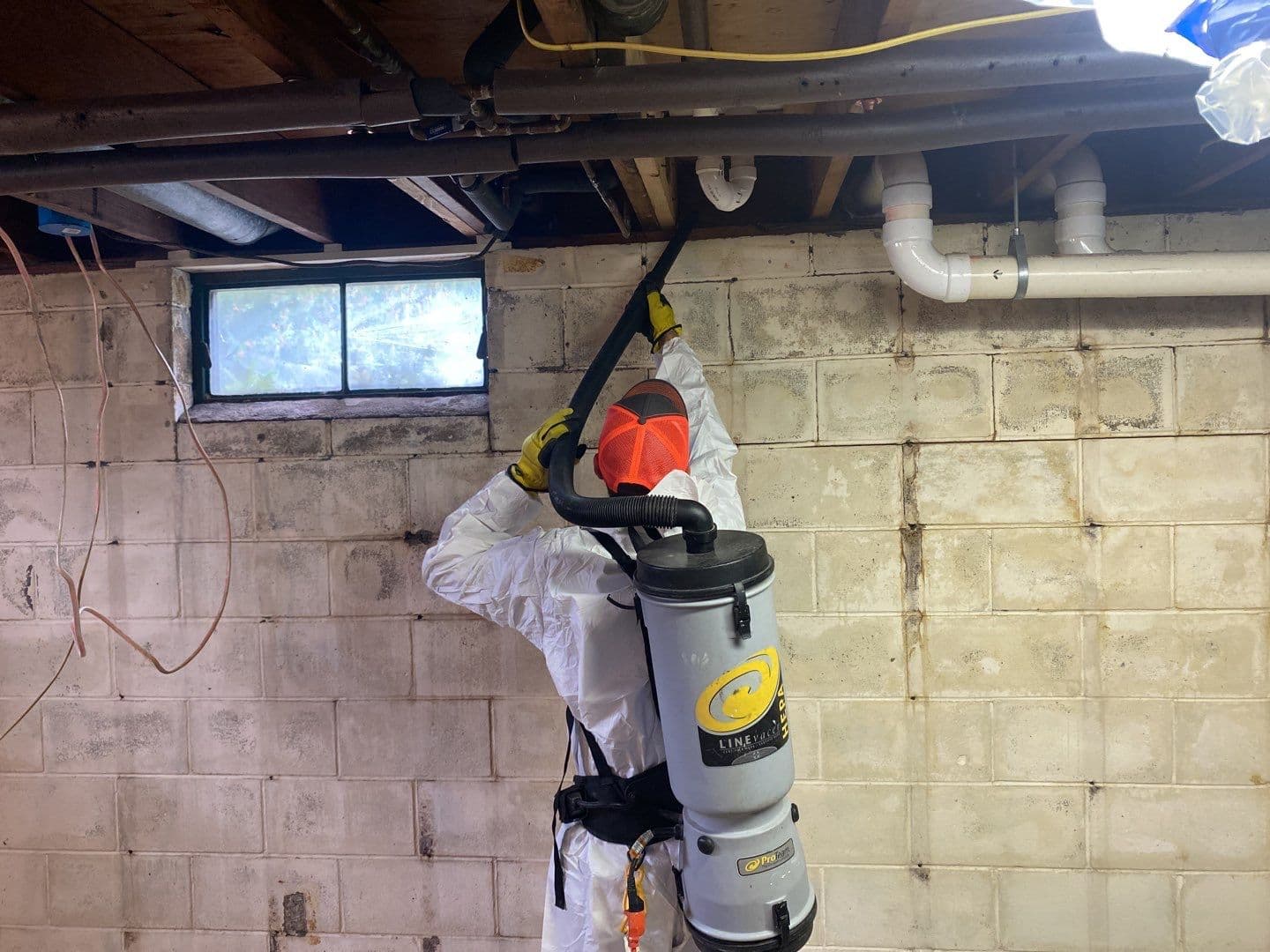
The Short Version
A good general contractor knows how to open a wall, coordinate trades, and rebuild a room. Those skills matter after water damage. They do not automatically answer how affected materials should be disturbed, how particles will be kept out of occupied rooms, or what must be checked before the new wall goes up.
The distinction is about the scope of the work. Some construction companies have qualified restoration personnel and suitable procedures. Others treat contamination as ordinary demolition followed by a chemical application. The owner needs to know which job is being proposed before paying for either one.
This guide explains where construction and remediation overlap, where their responsibilities differ, and how to organize the handoff. The goal is not to make the project more complicated. It is to avoid paying for a beautiful repair over an unresolved water problem or paying again to clean rooms affected by careless disturbance.
This guide covers:
- Removing a wall is not the whole job
- Compare responsibilities rather than labels
- What to ask before demolition starts
- Shortcuts that can leave you paying twice
- Coordinate the handoff to rebuilding
Removing a wall is not the whole job
In ordinary remodeling, the main concern may be efficient demolition and a sound finished assembly. When materials are contaminated, opening that assembly can release particles into occupied rooms. That is why the EPA's remediation guide calls for containment, with full containment for areas larger than 100 square feet. The removal route, protection, cleaning, and drying become part of the work.
The EPA homeowner guide emphasizes fixing moisture and addressing affected materials. A contractor who offers only replacement board and paint has not explained how the existing condition will be handled.
Compare responsibilities rather than labels
| Task | Construction role | Cleanup role |
|---|---|---|
| Water-source repair | Plumbing, roofing, drainage, or assembly repair | Identifies how that repair relates to the affected area |
| Opening materials | Creates access or removes finishes | Controls disturbance and defines affected boundaries |
| Particle management | General jobsite housekeeping | Appropriate isolation, filtration, and cleaning |
| Completion | Finished construction | Agreed cleanliness and drying before rebuilding |
There is no reason a qualified provider cannot offer both. The important point is that each phase needs its own method, price, and completion conditions. The same thinking helps when you compare a franchise vs a local mold company.
Construction skill and contamination control are different skills
Removing a cabinet without damaging the floor takes care. Removing that cabinet while assessing contaminated backing, controlling dust, and protecting the route out of the house adds a different set of responsibilities. A contractor should be able to describe both parts if both are included. Mold work has its own industry standard, the ANSI/IICRC S520 Standard for Professional Mold Remediation.
Ask about the person making material decisions. Who determines whether insulation stays, whether adjacent wallboard needs investigation, and whether a hidden discovery changes the work boundaries? If the answer is simply the demolition crew, find out what qualifications and supervision support that arrangement.
The same applies to cleaning. A room swept after demolition may look orderly while fine debris remains on framing, ledges, or adjacent surfaces. Ask what the cleanup phase includes and how it will be evaluated before finishes cover it.
A bathroom leak shows why the handoff matters
Consider a leaking shower connection that wets the wall and the edge of the floor. The plumber repairs the connection. The removal work addresses affected materials and accessible retained surfaces. Drying checks help establish whether the retained assembly is ready. The reconstruction contractor then installs the new finish.
Each participant can complete a narrow task while the overall project remains unfinished. The plumbing repair does not prove that the floor is dry. The demolition invoice does not prove that the surrounding room was protected. The new tile does not show whether the back of the wall was cleaned.
The owner should not have to guess who confirms each handoff. Put the responsibilities in the contract or an agreed project schedule.
Questions that reveal the actual method
Before accepting a construction bid for affected materials, ask:
- What protection is established before demolition?
- What is the route for debris and how is it kept separate from daily household traffic?
- Which surfaces receive final cleaning rather than only rough debris removal?
- Who decides whether hidden damage needs additional assessment?
- What drying evidence is retained before reconstruction?
- Who performs any agreed independent completion review?
An experienced company can answer these questions in ordinary language. The FTC's home improvement guide adds a few more: check the license and insurance, and ask for a written contract. The owner does not need a page of equipment names without an explanation of their purpose. Our list of red flags when hiring a mold remediation company covers more warning signs to watch for.
One business can coordinate the work without blending the phases
There is a practical benefit when a qualified company coordinates removal, drying, and rebuilding. Scheduling can be easier, and one contact can reduce confusion. That benefit depends on the phases remaining visible in the scope.
Ask for separate descriptions of source correction, remediation, and construction. Confirm what happens if the cleanup requires more work than the original reconstruction estimate assumed. Also check how outside assessment is accommodated when the project warrants it.
The alternative is several specialist businesses with a written handoff. Neither model is automatically superior. What matters is whether the actual crew, supervision, methods, and completion checks fit the building. A logo that says construction or restoration does not settle that question by itself.
What to ask before demolition starts
- Which materials will be removed and which retained?
- How will clean rooms and contents be protected?
- What equipment is appropriate to the work?
- How will debris leave the building?
- Who checks drying and completion?
Ask for relevant training and experience, insurance, and any applicable licensing. Verify credentials with the issuing organization. A certificate for one employee does not automatically describe every crew member or every project.
Our inspection service can help define the scope. Independent laboratory work is separate when an outside opinion or specific sampling question is needed.
Shortcuts that can leave you paying twice
Common weak proposals include spraying all surfaces without explaining material condition, painting over repeated staining, or placing fans so disturbed particles move into other rooms. A promise to kill everything does not establish removal or source correction.
Look for an estimate that identifies:
- The water problem and repair responsibility.
- Work boundaries and access assumptions.
- Protection and cleaning methods.
- Contents and waste handling.
- Rebuilding exclusions and change orders.
Hidden damage may require a revised scope. It should be documented and approved, rather than used as an open-ended authorization.
Coordinate the handoff to rebuilding
New finishes can conceal an unresolved problem. Before reconstruction, confirm that the source has been addressed, retained materials are ready, and the agreed cleanup checks are complete. A dry-looking face is not evidence that the entire assembly is ready.
Keep photographs, measurements, and completion records. If a substantial job needs independent verification, agree on the assessor and criteria before starting. Our remediation service explains how controlled work supports this handoff.
Make three bids describe the same job
A low price is meaningful only after the work is comparable. One proposal may include removing affected insulation, cleaning the framing, and managing debris. Another may include spraying exposed surfaces while leaving the insulation in place. The totals do not tell you which difference matters until the actual materials and methods are written down.
Give each bidder the same history and any existing assessment. Ask them to identify the areas they evaluated, the materials they propose to remove, the surfaces they intend to retain, and the source repairs included. If one company sees a larger problem, have it explain the evidence rather than simply revising the total.
The owner should be able to identify these items before signing:
- Work boundaries and access assumptions.
- Protection for occupied rooms and the route used to carry debris out.
- Material removal, cleaning, and equipment included.
- Water-source repair responsibilities.
- Contents handling and disposal arrangements.
- Completion checks and any outside assessment.
- Rebuilding, paint, flooring, or specialist work excluded.
- Payment terms and the approval process for additional work.
Hidden damage is a legitimate reason for a project to change. It is not a reason to leave the change process vague. Ask for photographs, an explanation of the new finding, and a written adjustment before additional work is authorized whenever conditions allow. Urgent safety actions should also be documented clearly.
Ask who is responsible when the job gets difficult
Find out who supervises the crew, who answers technical questions, and who can approve a scope change. The salesperson may not be the person making decisions in the work zone. That is normal in many companies, but the handoff should be clear.
Insurance deserves more than a yes-or-no answer. Request current evidence of the relevant coverage and ask whether it covers the actual operations being proposed. Discuss subcontractors and specialist trades separately. A certificate gives useful information; it does not explain every exclusion in a policy.
References are more helpful when the projects resemble yours. A company may do excellent emergency water extraction and have less experience protecting original finishes in a historic house. Ask about a basement, a crawl space, or an occupied property with similar access and material conditions, rather than asking only whether past customers were happy.
Treat the warranty as a document
Read what is covered, what is excluded, and what the owner must maintain. A warranty on completed work does not normally mean every later plumbing leak or drainage failure becomes the contractor's responsibility. Ask how to report a concern, who investigates it, and what records the owner should retain.
Every job comes with a written scope before work starts and a written closeout report when it is done. Ask for the written terms for your project. The useful promise is the one tied to a defined scope and conditions, not an unlimited statement about every future event in the building.
A professional company should be comfortable explaining all of this before work begins. You do not need to interrogate the crew or become a technical specialist. You do need enough information to know what you purchased and how the outcome will be judged.
How controlled cleanup differs from ordinary demolition
Taking a wet wall out is often necessary. How it comes out matters to the rest of the property. Breaking material apart, dragging it through occupied rooms, and leaving fine debris behind can spread a localized problem beyond the original work area.
Before disturbance, the contractor should define the work boundaries and the protection appropriate to the conditions. The plan may include barriers, controlled access, filtration, and a protected removal route. Equipment and containment should be selected for the project rather than copied from a photograph of another job.
Discuss the practical details before the first cut:
- Which rooms can remain occupied and which must be kept clear?
- Where will workers and debris enter and leave?
- What happens to furniture, clothing, and stored items?
- Does the HVAC arrangement require a specific precaution?
- Who handles a discovery that exceeds the original scope?
- What must be checked before protection is removed?
Porous materials that cannot be adequately cleaned may need removal. Accessible retained materials may be cleaned using appropriate methods. The decision depends on contamination, material condition, and access, not simply whether a surface can be made to look lighter with a chemical.
Source correction must also be assigned. Sometimes the cleanup company performs it; sometimes a plumber, roofer, drainage contractor, or other trade does. The owner needs a clear division of responsibility. Otherwise, the removal crew can finish its contract while the underlying wetting remains nobody's task.
Completion should be more than a photograph
A tidy photograph documents appearance. It does not establish the moisture condition of retained materials, the back of an assembly, or the repair of a concealed source. Agree on the completion criteria before work begins so the final review is checking an outcome both parties understand.
Useful records can include labeled progress photographs, the materials removed, cleaning work completed, drying measurements, and source repairs. Where independent verification is appropriate, decide who conducts it and what it evaluates before the project starts. An outside assessment can be valuable without requiring the same sampling package on every job.
Rebuilding should follow that review. Covering a wall too early makes a later question harder to answer and can hide remaining wetting. A construction deadline should not replace the evidence that the assembly is ready.
After normal use resumes, watch the relevant area again. Check the repaired connection, the room that formerly smelled musty, or the foundation after rain. If the condition returns, investigate the water and material history rather than assuming another surface treatment is the entire answer.
This is why remediation, drying, source repair, and reconstruction should be named separately even when one business coordinates them. They work together, but they solve different parts of the problem. The written scope should show how one phase hands the building to the next.
Frequently Asked Questions
Can a general contractor perform remediation?
Yes, if the provider has the appropriate competence, equipment, procedures, and applicable authorization. The construction title alone does not prove those things.
Is spraying enough before installing new drywall?
Not automatically. Material condition, contamination, source correction, and drying must be assessed.
Should I hire separate companies?
Sometimes. Separate specialists can work well if responsibilities and the handoff are documented.
Is an air test always required?
No. Testing should answer a defined question or support agreed project requirements.
Who should approve extra removal?
The authorized owner or decision-maker should review documented findings and approve a written change order.
Plan the cleanup before the rebuild
If your contractor is ready to replace a wet wall but the contamination-control and drying questions are still unresolved, settle the sequence first. We can assess the affected materials and discuss a practical handoff to source repair and reconstruction.
Book a visit through our online scheduler or call 502-660-2660 to talk through the property. Inspections and quotes are free. Review our Mold Remediation and Inspection pages for more about the relevant services.
Mold Men is based in Louisville and serves the Louisville metro, Owensboro, New Albany, and Jeffersonville. We also handle crawl space encapsulation and vapor barrier replacement when moisture under the floor is part of the problem, along with hoard cleanouts and junk removal when access needs to be restored first.
Every job comes with a written scope before work starts and a written closeout report when it is done. Our referral program pays 15 percent, up to $500, when someone you refer books qualifying work. If you are unsure which service fits, explain the condition when you call and we can discuss the appropriate next step.