
Basement Mold Removal in Louisville, KY
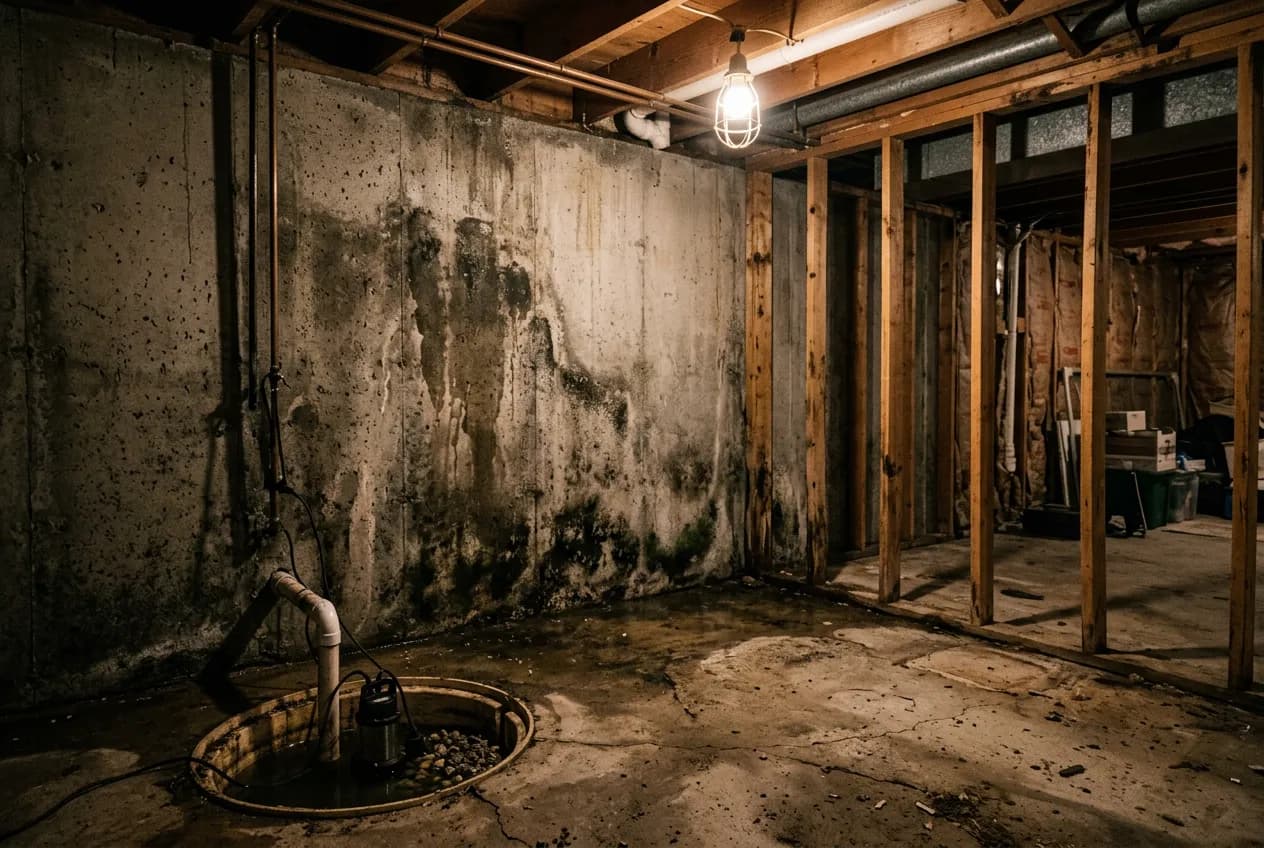
Basement mold is usually a moisture problem before it is a cleaning problem. Groundwater, wet foundation walls, sump problems, plumbing leaks, flooding, and high humidity can keep basement materials damp long enough for mold to grow. The Mold Men inspects the basement, identifies the moisture source, and gives you a written scope before removal starts. Free inspections are available with about 24 hours notice, with same-day response.
No time that works? Call or text 502-660-2660.
- Fully Insured
- Book in 30 Seconds
- 5-Star Rated on Google
- 7+ Years of Experience
5.0 out of 5 on Google
Read our reviewsStart with a few details
Get a free quote for your property
Tell us your name, phone, and city. We'll follow up with the right next step.
Find What Is Keeping the Basement Wet
Basement mold keeps coming back if groundwater, a plumbing leak, humidity, or another moisture source is still active. We look at the source before deciding what needs to be removed.
Finished and Unfinished Basements
An unfinished basement may show the problem directly on framing or stored items. A finished basement can hide moisture behind drywall, insulation, baseboards, carpet, and finished walls.
Containment From the Rest of the House
Basement removal work can create dust and disturb affected material. The work area needs to be separated so debris is not unnecessarily carried upstairs.
Written Scope Before Removal
You should know which walls, floors, insulation, or other materials are included before demolition begins. We inspect first and put the work in writing.
When Basement Mold Removal May Be Needed
Musty Odor That Keeps Returning
A basement can smell musty before visible mold is easy to find. Finished walls, carpet, boxes, insulation, and furniture can hide damp materials.
If the odor gets stronger after rain or during humid weather, moisture may be entering through the foundation or staying trapped inside finished materials. A mold inspection can help narrow down the source.
Wet Drywall, Carpet, or Baseboards
Drywall, carpet, padding, and insulation can hold moisture after a leak or water event. Even after the surface appears dry, the material behind it may remain damp.
Basement removal often means opening the area enough to reach wet or affected material instead of cleaning only what can be seen from the room.
Water at Foundation Walls or Floor Edges
Groundwater can enter through cracks, porous masonry, joints between the floor and wall, or other weak points in the foundation. Repeated dampness can affect framing and finishes installed against the wall.
If the basement has been finished over a foundation that continues to get wet, mold may develop behind the finished surface without being visible from the room.
Sump, Plumbing, or Flooding Problems
A failed sump pump, slow plumbing leak, backed-up drain, or flooding event can add a large amount of moisture quickly. The immediate water may be removed while drywall, insulation, carpet, or stored belongings remain damp.
Basement mold removal is often needed when materials stayed wet long enough for growth to develop.
What Is Included
The exact basement scope depends on whether the space is finished, how far moisture traveled, which materials are affected, and how the water entered. The written scope should identify what needs removal, what can be cleaned, and what must be dry before rebuilding starts.
Free basement inspection and moisture assessment
Review of visible foundation-wall and floor conditions
Inspection of accessible finished and unfinished basement areas
Evaluation of drywall, carpet, insulation, framing, and stored material where relevant
Written scope before work starts
Containment between the basement work area and the rest of the home where needed
Floor and access-path protection
Removal of affected drywall, insulation, carpet, padding, or other porous materials where included in the scope
HEPA vacuuming and detailed cleaning of structural surfaces where appropriate
Cleaning of affected framing and other salvageable materials
Bagging and removal of demolition debris
Drying of remaining structural materials
Review of humidity and moisture conditions after removal
Recommendations for correcting the moisture source
Final walkthrough and explanation of completed work
Our Process
Basement work is easiest to control when the water source, hidden materials, and containment plan are understood before demolition starts. The process moves from inspection to removal, drying, and source correction before the space is closed back up.
- 1
Inspect the Basement. We look at the visible mold, moisture patterns, foundation conditions, plumbing areas, sump area, finished walls, and other places tied to the problem.
- 2
Find the Moisture Source. The source may be groundwater, a wet foundation wall, flooding, a plumbing leak, sump failure, or high indoor humidity. The repair plan depends on which problem is present.
- 3
Write the Scope. The scope identifies the material that needs removal, the areas that can be cleaned, and the moisture correction that needs to happen.
- 4
Separate the Work Area. Containment helps keep demolition dust and disturbed material from moving into the upper floors. Access routes through the home are protected as needed.
- 5
Remove Wet or Affected Material. Drywall, insulation, carpet, padding, and other porous materials may need removal when they are affected and cannot reasonably be cleaned.
- 6
Clean and Dry the Remaining Structure. Exposed framing and other salvageable surfaces are cleaned according to the scope. Remaining materials are dried before the area is closed back up.
- 7
Final Review. We review the completed area, remaining moisture concerns, and what should be corrected before new drywall, flooring, or other finishes are installed.
Why Basement Mold Develops and Why the Source Matters
Groundwater Pushes Moisture Through Foundations
Basement walls and floors are below grade. Water in the surrounding soil can find its way through cracks, joints, masonry, and other openings.
A basement can stay damp even without a dramatic flood. Repeated seepage may be enough to keep drywall, framing, or stored items wet.
Finished Basements Hide Problems
Finished walls make a basement more comfortable, but they can also hide water. Drywall and insulation may sit directly in front of a foundation wall where moisture is entering.
By the time staining or odor appears on the room side, the hidden side may have been damp for much longer. That is why basement mold remediation sometimes requires opening finished areas rather than treating only the visible surface.
Humidity Can Keep Materials Damp
Basements tend to stay cooler than the upper floors. Humid air can leave the basement feeling clammy and keep stored belongings, wood framing, and other materials damp.
A dehumidifier may help control humidity after the water source is corrected, but it does not repair an active foundation leak or plumbing problem.
Slow Leaks Can Cause Large Hidden Problems
A small plumbing leak behind a finished wall may not produce standing water. It can still keep drywall, insulation, cabinets, or framing wet for a long period.
The goal is not only to remove mold. The leak or moisture path needs to be corrected before the basement is rebuilt.
Pricing and Cost Factors
Basement mold removal cost depends heavily on whether the basement is finished or unfinished. An unfinished space may provide direct access to framing and foundation walls, while a finished basement can require removal of drywall, insulation, flooring, trim, or other materials just to reach the affected area.
The size of the mold problem matters, but so does the water source. A small plumbing leak may create a concentrated area of damage, while groundwater or flooding can affect several walls or rooms.
Carpet, padding, stored belongings, built-in cabinets, and finished ceilings can also change the amount of work. Projects with limited access or large amounts of material to remove take more labor than open unfinished spaces.
The Mold Men provides a free inspection and written scope so the work can be based on what is actually affected instead of a generic basement price.
Timing and Scheduling
Free inspections are available with about 24 hours notice. We are available from 7 AM to 7 PM Eastern, seven days a week, with same-day response.
Project timing depends on how much material needs to be removed, how wet the remaining structure is, how quickly the moisture source can be corrected, and whether the basement is finished or unfinished.
Why Mold Men
A basement scope should be based on where the water traveled and what is actually wet, not on how much demolition can be sold. The goal is to expose what needs to be exposed, remove what cannot be saved, dry the structure, and avoid rebuilding over an active moisture problem.
We Inspect First
A musty basement does not automatically mean every wall needs to come out. We inspect the conditions first so the scope is based on the actual affected area.
We Fix the Moisture Source
Basement mold is usually tied to water or humidity. The project needs to address why the material became wet, not only what is growing on it.
No Spray-and-Pray
Spraying a finished basement wall does not address mold growing on the back of drywall or inside wet insulation. The affected materials have to be evaluated based on what is happening behind the finished surface.
Clear Written Scope
You should know what is being removed and why before demolition starts. We give you a written scope so the project is clear.
Related Mold Men Services
Basement mold can connect to inspection, other remediation work, crawl-space moisture, or a cleanout when stored contents block access. These are the most common related services.
- Mold Inspection: For identifying the extent of a basement mold or moisture problem before work starts.
- Mold Remediation: For mold affecting other rooms or multiple parts of the building.
- Attic Mold Removal: For mold on attic roof decking and rafters.
- Crawl Space Encapsulation: For crawl-space moisture below the home.
- Junk Removal: For removing damaged belongings, stored material, or debris when a basement needs to be cleared.
- Hoard Cleanout: For properties where a large amount of stored material must be sorted and removed before remediation can begin.
Areas We Serve
- Louisville, KYOur home base, with free inspections across Jefferson County.
- New Albany, INMold removal and crawl space work just across the river.
- Jeffersonville, INFree inspections and written quotes in Clark County.
- Owensboro, KYServing Daviess County and the Owensboro area.
- Evansville, INServing Vanderburgh County and the Evansville area.
We also serve communities around Louisville, across Southern Indiana, and farther west toward Owensboro and Evansville. See all of our service areas.
Frequently Asked Questions
Can I finish my basement again after mold removal?
Usually the basement can be rebuilt after the affected material is removed, the remaining structure is dry, and the original moisture source has been addressed.
Do not rush to cover foundation walls or framing while they are still damp. The repair should solve the water problem before new finishes hide the area again.
Is basement mold covered by homeowners insurance?
Coverage depends on the cause of the water and the terms of your specific policy. Sudden plumbing events may be treated differently from long-term seepage, flooding, or maintenance problems.
Check your policy and talk with your insurance company or adjuster about your specific loss before assuming the work is covered.
Do I need a dehumidifier in my basement?
A dehumidifier can help control basement humidity, especially during humid weather. It does not fix groundwater entering through a foundation or an active plumbing leak.
The moisture source should be identified first. Humidity control can then be part of keeping the basement dry after the underlying issue is corrected.
What happens to stored belongings in a moldy basement?
Belongings need to be evaluated based on material, condition, and how much moisture or contamination they were exposed to. Hard, nonporous items are different from damp cardboard, upholstered furniture, or other porous materials.
If a large amount of material needs to be cleared, our junk removal or hoard cleanout services may be useful before or alongside the basement work.
Does all basement drywall have to be removed?
Not automatically. Removal depends on where the water traveled, how long the material stayed wet, and whether mold is present behind or within the wall system.
The inspection and written scope identify which areas need to be opened rather than assuming the entire basement must be demolished.
How do you keep basement mold from spreading upstairs during removal?
Containment separates the work area from other parts of the home. Access paths are protected, affected material is removed carefully, and debris is contained before it leaves the work area.
The exact setup depends on the basement layout and scope of removal.
Schedule a Free Basement Mold Inspection
Call or text The Mold Men at 502-660-2660, email info@mold-men.com, or schedule a free inspection to find out where the basement moisture is coming from and what needs to be removed.
No time that works? Call or text 502-660-2660.