
Crawl Space Vapor Barrier Replacement in Louisville, KY
A damaged crawl-space vapor barrier can leave large areas of soil exposed under the house. Moisture from that soil can raise humidity in the crawl space and contribute to musty odors, damp insulation, and moisture on framing. The Mold Men replaces torn, loose, missing, or failing vapor barriers when a full encapsulation system is not needed. Free inspections are available with about 24 hours notice, with same-day response.
No time that works? Call or text 502-660-2660.
- Fully Insured
- Book in 30 Seconds
- 5-Star Rated on Google
- 7+ Years of Experience
5.0 out of 5 on Google
Read our reviewsStart with a few details
Get a free quote for your property
Tell us your name, phone, and city. We'll follow up with the right next step.
A Smaller Crawl Space Moisture Job
Vapor barrier replacement is for crawl spaces where the ground covering has failed but the crawl space does not need a full encapsulation project.
Remove the Failed Barrier First
Old plastic can become torn, loose, dirty, folded back, or buried under debris. We remove the failed material as part of preparing the crawl space for replacement.
Cover Exposed Soil Properly
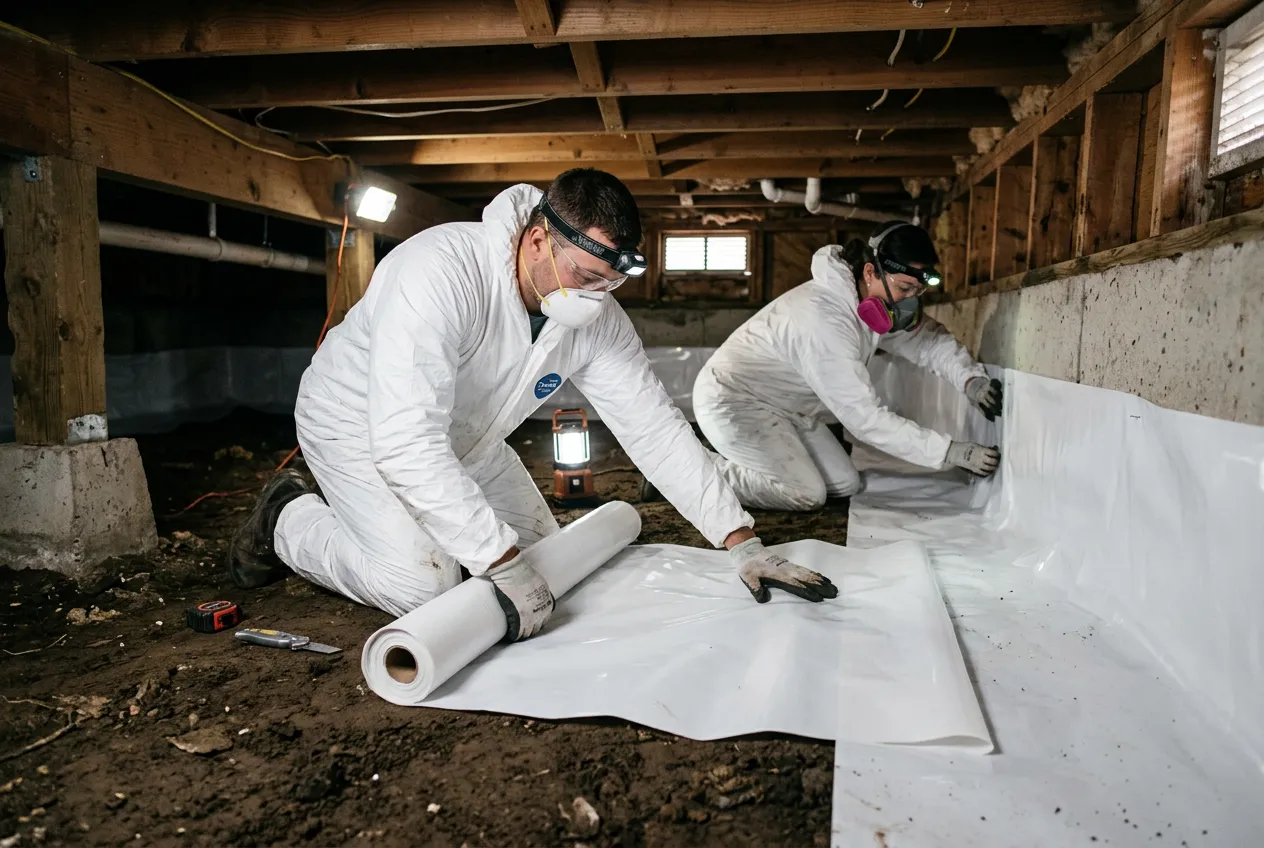
The new barrier is installed across the crawl-space floor with appropriate overlap so exposed soil is not left between loose pieces of plastic.
Know When Replacement Is Not Enough
Standing water, drainage problems, persistent high humidity, or mold on structural framing may point to a larger crawl-space problem. In those cases, full encapsulation may be the better service.
When Vapor Barrier Replacement May Be Needed
Torn or Loose Plastic Across the Crawl Space
Older vapor barriers often get damaged over time. Contractors, plumbing work, stored material, animals, or normal access can pull sections apart or leave large tears.
Once the plastic is no longer covering the ground consistently, soil moisture has a more direct path into the crawl space.
Large Areas of Exposed Dirt
A crawl space may have plastic in one section and bare soil in another. Sometimes the original barrier was never installed wall to wall. Other times the material has shifted or been removed.
A replacement barrier covers the accessible soil more consistently and reduces the amount of ground moisture entering the crawl space.
Musty Odor or High Humidity Under the House
A musty crawl space can have several causes, but exposed damp soil is one place to look. Moisture evaporating from the ground can raise humidity around floor framing, insulation, plumbing, and ductwork.
A free mold inspection can help determine whether the issue is only the failed barrier or whether mold or another moisture problem is also present.
Damp or Sagging Crawl Space Insulation
Insulation can become damp when crawl-space humidity stays high. It may begin to sag, fall, or hold moisture against nearby framing.
Replacing a failed ground barrier can be part of reducing the moisture load, but wet insulation or mold on structural wood may require additional work beyond the barrier itself.
What Is Included
This service is intentionally narrower than full encapsulation. The written scope should explain what old barrier will be removed, what preparation is needed, what replacement material will cover, and whether anything in the crawl space points to a larger moisture problem.
Free crawl-space inspection
Review of the existing vapor barrier condition
Identification of torn, loose, missing, or exposed areas
Review of visible moisture conditions under the home
Written scope before work starts
Removal of failed or loose vapor-barrier material included in the scope
Removal of accessible debris that prevents proper barrier placement where included
Preparation of the crawl-space floor
Installation of replacement vapor-barrier material
Overlap between adjoining sections
Sealing of seams where included in the written scope
Fitting around accessible piers and penetrations
Final visual walkthrough
Recommendation for full crawl-space encapsulation when replacement alone is not appropriate
Our Process
Vapor barrier replacement should stay focused on the ground cover. We first make sure the crawl space is appropriate for this smaller service, then remove failed material, prepare the floor, install the replacement barrier, and review the finished condition.
- 1
Inspect the Crawl Space. We enter the crawl space and look at how much of the ground is covered, how much plastic is damaged or missing, and whether there are signs of a larger water or mold problem.
- 2
Decide Whether Replacement Is the Right Service. Vapor barrier replacement is the smaller option. If the crawl space has standing water, drainage problems, persistent high humidity, or mold on joists, we may recommend crawl space encapsulation instead.
- 3
Write the Scope. The scope explains what old material will be removed, what debris needs to be cleared, and what areas will receive the new barrier.
- 4
Remove Failed Material and Debris. Loose and damaged plastic is taken out where included in the scope. Accessible debris that prevents the new barrier from lying properly is also cleared as needed.
- 5
Install the New Barrier. The replacement material is laid across the soil with appropriate overlap between sections. The material is fitted around accessible piers and other crawl-space obstacles.
- 6
Seal and Finish the Installation. Seams are handled according to the written scope. The goal is to reduce exposed soil and leave the crawl-space floor covered consistently.
- 7
Final Review. We inspect the finished barrier and explain any crawl-space conditions that may need a larger moisture-control solution.
How Crawl Space Ground Moisture Works
Soil Releases Moisture Into the Crawl Space
The dirt under a house contains moisture even when there is no standing water. That moisture can evaporate into the crawl space and increase humidity below the floor system.
A ground vapor barrier reduces direct evaporation from exposed soil.
Damaged Plastic Stops Doing Its Job
A barrier does not help much if half of the crawl space is uncovered. Large tears, missing sections, folded plastic, and open seams leave soil exposed.
Replacing damaged material restores more consistent coverage instead of relying on loose pieces that have shifted over time.
Thickness Is Only One Part of the Decision
Vapor-barrier material comes in different thicknesses and levels of durability. A crawl space that receives regular service access may benefit from a more durable material than a space that is rarely entered.
The choice should also consider how the barrier will be laid, overlapped, and protected during future crawl-space work. We explain the available approach in the written scope rather than treating thickness as the only thing that matters.
Some Crawl Spaces Need More Than a Barrier
A new piece of plastic cannot solve standing water, an active drainage problem, persistent high humidity, or mold already growing on joists and subfloor.
Those conditions may require crawl space encapsulation or separate mold remediation. Vapor barrier replacement is meant to stay a focused service when the crawl space does not need the larger system.
Pricing and Cost Factors
Vapor barrier replacement is generally a smaller scope than full crawl-space encapsulation because the work is focused on the ground covering rather than creating a complete sealed crawl-space system.
The cost depends on crawl-space size, clearance, access, the amount of old material that needs removal, how much debris must be cleared, and how complicated the floor area is around piers and other obstructions.
The condition of the existing barrier also matters. Replacing a mostly intact barrier with several damaged sections is different from removing layers of torn plastic and debris throughout the entire crawl space.
Material selection can also change the scope. Different thicknesses offer different levels of durability, especially in crawl spaces that are entered regularly for plumbing, HVAC, electrical, or other service work.
We inspect the crawl space first so you know whether straightforward vapor barrier replacement makes sense or whether a larger encapsulation project would solve the actual problem better.
Timing and Scheduling
Free inspections are available with about 24 hours notice. The Mold Men is available from 7 AM to 7 PM Eastern, seven days a week, with same-day response.
Scheduling depends on crawl-space access, size, clearance, the amount of old plastic and debris that must be removed, and how much preparation is needed before the replacement barrier can be installed.
Why Mold Men
A basic barrier job should stay basic when that is all the crawl space needs. We inspect first so a torn sheet of plastic does not automatically turn into a larger project, while still pointing out conditions that a replacement barrier cannot solve.
We Inspect First
A torn vapor barrier does not automatically mean the whole crawl space needs encapsulation. We inspect the space first and recommend the smaller service when that is all the crawl space needs.
We Look at the Moisture Source
The ground barrier is one part of crawl-space moisture control. If the inspection shows standing water or another active moisture problem, we point that out rather than covering it with new plastic.
No Spray-and-Pray
A vapor barrier project is not a mold treatment. If structural framing has visible mold, that needs to be evaluated separately instead of being hidden above a new ground cover.
Clear Written Scope
The scope explains what material is coming out, what is being installed, and whether any crawl-space condition falls outside a basic barrier replacement.
Related Mold Men Services
Vapor barrier replacement sits between a simple crawl-space repair and a larger moisture-control project. These related services help when the inspection shows that the crawl space needs more than new ground plastic.
- Crawl Space Encapsulation: The larger option when the crawl space needs a more complete sealed moisture-control system rather than only replacement ground plastic.
- Mold Inspection: For crawl spaces with musty odor, visible staining, damp framing, or uncertainty about whether mold is present.
- Mold Remediation: For mold on joists, subfloor, framing, or other affected building materials.
- Junk Removal: For removing stored material or debris that prevents access to a crawl-space entry or work area.
- Hoard Cleanout: For properties where accumulated material needs sorting and removal before other work can begin.
Areas We Serve
- Louisville, KYOur home base, with free inspections across Jefferson County.
- New Albany, INMold removal and crawl space work just across the river.
- Jeffersonville, INFree inspections and written quotes in Clark County.
- Owensboro, KYServing Daviess County and the Owensboro area.
- Evansville, INServing Vanderburgh County and the Evansville area.
We also serve communities around Louisville, across Southern Indiana, and farther west toward Owensboro and Evansville. See all of our service areas.
Frequently Asked Questions
What is the difference between a vapor barrier and crawl-space encapsulation?
Vapor barrier replacement focuses on covering exposed soil with replacement ground material. It is the smaller service when the crawl space does not need a complete sealed system.
Crawl space encapsulation is the larger option when the crawl space has broader moisture-control needs.
Does old crawl-space plastic need to be removed first?
Loose, torn, or badly damaged material may need removal so the new barrier can be installed properly. The amount of old material that needs to come out depends on its condition and how it is lying across the crawl-space floor.
The written scope explains what removal is included before installation begins.
How thick should a crawl-space vapor barrier be?
Different thicknesses provide different levels of durability. The right choice depends on crawl-space access, how often people need to move through the area, and the condition of the crawl-space floor.
We keep the recommendation general until the crawl space is inspected rather than saying every property needs the same material.
Will a vapor barrier get rid of a musty smell?
It may help if exposed soil moisture is contributing to high crawl-space humidity. A musty odor can also come from mold, wet insulation, plumbing leaks, standing water, or other conditions.
The inspection helps determine whether replacement alone is enough.
What if there is standing water under the house?
Vapor barrier replacement is not meant to solve standing water. The water source needs to be addressed before installing a new ground barrier.
A crawl space with water problems may need a larger moisture-control plan rather than this smaller service.
What if there is mold on the floor joists?
A new vapor barrier does not remove mold from structural wood. Mold on joists, subfloor, or framing should be evaluated separately.
The project may require mold remediation, and a crawl space with persistent moisture may also be better suited for full encapsulation.
Schedule a Free Vapor Barrier Inspection
Call or text The Mold Men at 502-660-2660, email info@mold-men.com, or schedule a free inspection to find out whether your crawl space needs a new vapor barrier or a larger encapsulation project.
No time that works? Call or text 502-660-2660.