
Attic Mold Removal in Louisville, KY
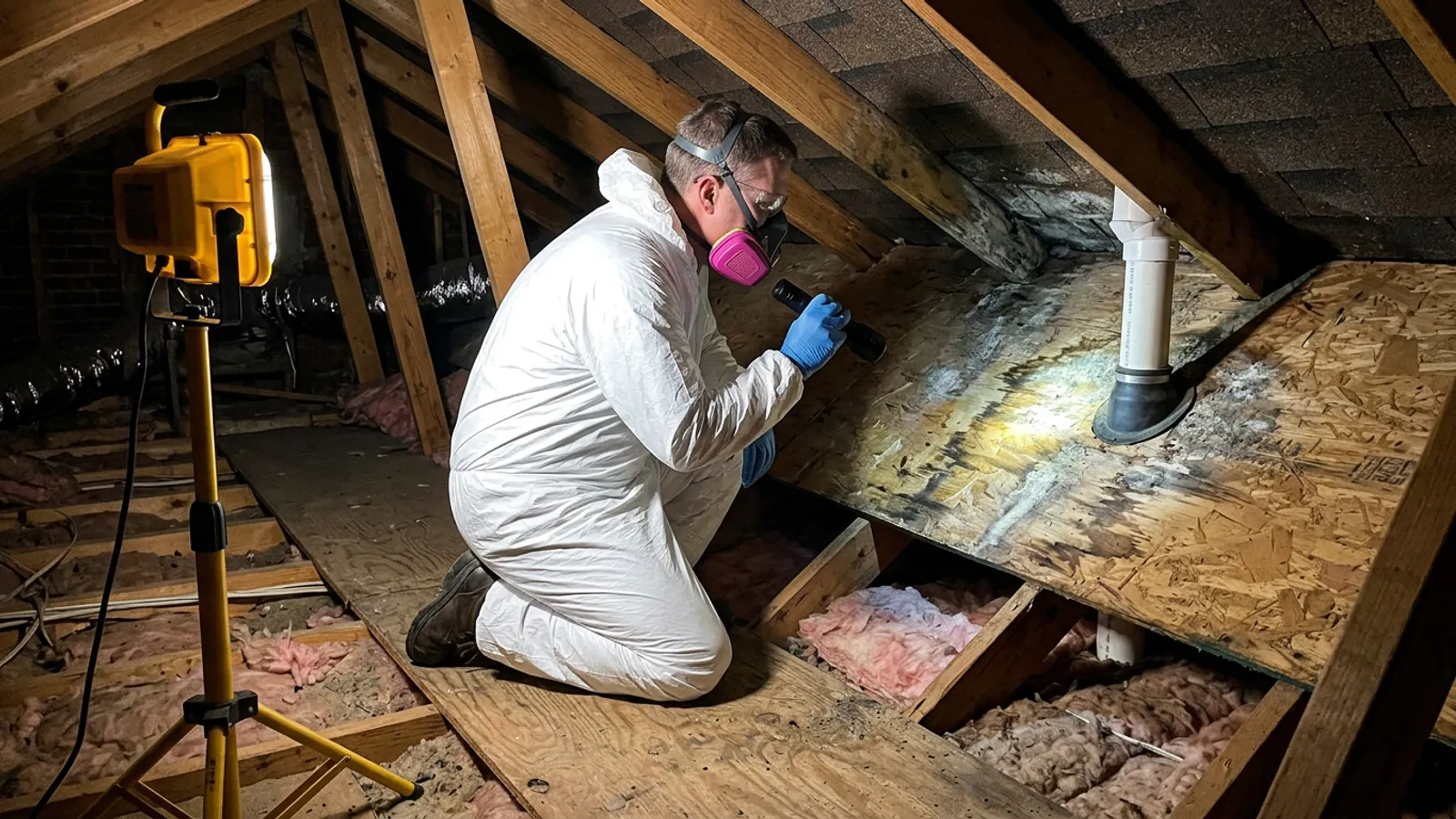
Attic mold usually starts with moisture that has nowhere to go. Bathroom fans venting into the attic, blocked ventilation, roof leaks, and winter condensation can leave roof sheathing and framing damp long enough for mold to grow. The Mold Men inspects the attic first, identifies the moisture source, and builds the removal work around what is actually causing the problem. Free inspections are available with about 24 hours notice, and we offer same-day response.
No time that works? Call or text 502-660-2660.
- Fully Insured
- Book in 30 Seconds
- 5-Star Rated on Google
- 7+ Years of Experience
5.0 out of 5 on Google
Read our reviewsStart with a few details
Get a free quote for your property
Tell us your name, phone, and city. We'll follow up with the right next step.
Find the Moisture Source First
Cleaning mold without correcting the moisture problem usually means dealing with the same attic again. We look for ventilation problems, leaks, condensation, and exhaust fans dumping moisture into the attic.
Attic-Specific Inspection
Attics are different from basements, crawl spaces, and living areas. We look closely at roof sheathing, rafters, insulation, vents, bathroom fan ducts, and other places where moisture can collect.
Careful Work in Tight Spaces
Attics can have low clearance, exposed framing, loose insulation, and limited walking areas. The work needs to be planned around the structure so the affected framing can be reached without creating unnecessary damage.
Clear Scope Before Work Starts
You should know what is being cleaned, what may need removal, and what moisture correction needs to happen. We provide a clear written scope after the inspection.
When Attic Mold Removal May Be Needed
Black or Dark Staining on Roof Sheathing
Dark staining across plywood or roof decking can be a sign that the attic has been staying damp. Mold may also appear on rafters, trusses, or framing around areas where warm indoor air is reaching a cold roof surface.
Not every dark mark is the same thing, so the first step is an inspection. Our mold inspection service helps determine what is happening before a removal plan is written.
Bathroom or Kitchen Fans Vent Into the Attic
A bathroom fan is supposed to carry humid air out of the house. If the duct ends inside the attic, every shower can add moisture directly below the roof.
Kitchen exhaust can create the same type of problem if it is not vented outside correctly. Fixing the exhaust path can be just as important as cleaning the affected framing.
Frost or Condensation in Winter
Warm indoor air can reach a cold attic and condense on roof decking, nails, and framing. In colder weather, that moisture can freeze and show up as frost on roofing nails or sheathing.
When temperatures rise, the frost melts back into the attic. Repeated wetting can create conditions where attic mold keeps returning.
Musty Smell Near the Upper Floor or Attic Access
A musty smell around the attic hatch, upper hallway, or ceiling area can point to moisture above the living space. The source may be mold, wet insulation, a roof leak, or condensation.
The smell alone does not tell you the size of the problem. An attic inspection can narrow down where the moisture is coming from and what needs to be addressed.
What Is Included
The exact scope depends on attic access, the amount of affected framing, insulation conditions, and the moisture source. A written scope should explain what will be cleaned, what may need removal, and what must be corrected so the attic can stay dry.
Attic inspection and moisture assessment
Evaluation of visible mold or staining on roof sheathing, rafters, and framing
Review of bathroom and kitchen exhaust routing where accessible
Review of soffit, ridge, and other attic ventilation conditions
Check for visible roof-leak or condensation patterns
Written scope before work begins
Containment where needed to separate the attic work from the living space
Removal of affected material when it cannot reasonably be cleaned
Cleaning of affected roof decking and structural framing where appropriate
HEPA vacuuming and detailed surface cleaning where included in the scope
Protection of access paths through the home
Review of insulation affected by moisture or contamination
Recommendations for correcting the moisture source
Final walkthrough and explanation of the work completed
Our Process
Attic work should move from inspection to source correction, then removal and cleaning. The order matters because cleaning the roof deck without fixing the moisture problem leaves the attic vulnerable to the same condition again.
- 1
Inspection. We start by looking at the attic conditions and the areas where moisture is entering or collecting. The inspection is free with about 24 hours notice.
- 2
Identify the Cause. We look for fan ducts ending in the attic, blocked soffit or ridge ventilation, roof leaks, winter condensation, and other visible moisture paths.
- 3
Write the Scope. The written scope explains what attic surfaces need work, what material may need removal, and what source correction is needed to reduce the chance of the mold returning.
- 4
Protect the Home. Attic access often runs through a hallway, bedroom, closet, or pull-down stair. We protect the access path and separate the work area as needed so dust and debris are not carried through the house.
- 5
Clean or Remove Affected Material. Roof decking and structural framing can often be cleaned when the material is still sound. Wet or damaged material that cannot be reasonably restored may need removal or replacement as part of the overall repair plan.
- 6
Address the Moisture Problem. The attic will not stay dry if bathroom exhaust still dumps into it or ventilation remains blocked. The source needs to be corrected along with the mold work.
- 7
Final Review. We review the cleaned area, moisture conditions, and any ventilation or repair items that still need attention.
Why Attic Mold Develops and Why the Source Matters
Warm Air Meets a Cold Roof
Attics can become damp even when the roof is not actively leaking. Warm, moisture-heavy air from the house can rise into the attic and hit cold roof sheathing.
That moisture can condense on decking, nails, rafters, and other cold surfaces. Repeated condensation is one of the reasons attic problems can become much more noticeable during winter.
Exhaust Fans Can Feed the Problem
Bathroom and kitchen exhaust contains a large amount of moisture. When a duct disconnects, ends short, or vents into the attic instead of outdoors, that moisture is released directly into a confined space.
Cleaning the visible mold without fixing the exhaust path leaves the cause in place. The fan needs a proper route out of the structure.
Blocked Ventilation Traps Moisture
Soffit vents and ridge vents help move air through an attic. Insulation, debris, or construction changes can interfere with that airflow.
An attic with poor airflow may stay damp much longer after moisture enters. Correcting ventilation is part of preventing the same staining and growth from showing up again.
Roof Leaks and Condensation Can Look Similar
Water around a roof penetration may come from a leak, but moisture patterns can also come from condensation. The repair depends on the source.
That is why The Mold Men inspects before recommending mold remediation. The goal is to address the actual moisture path instead of treating every attic the same way.
Pricing and Cost Factors
Attic mold removal costs depend on the size of the affected area, how difficult the attic is to access, how much clearance the crew has, and whether insulation or other material needs to be removed to reach the framing.
The condition of the roof decking also matters. Cleaning sound sheathing is different from dealing with material that has been damaged by a long-running roof leak or repeated moisture exposure.
Ventilation corrections and exhaust-fan routing can also affect the overall project. The inspection is used to separate the mold-removal scope from repair work that may need to be completed to keep the attic dry.
We do not give a one-size-fits-all price without looking at the attic first. The inspection and written scope explain what the project actually needs.
Timing and Scheduling
Free inspections are available with about 24 hours notice. The Mold Men is available from 7 AM to 7 PM Eastern, seven days a week, with same-day response.
The time needed for the work depends on attic size, access, the amount of affected framing, insulation conditions, and the moisture correction involved.
Why Mold Men
The point is not to sell attic cleaning before the cause is understood. A good scope should explain why the attic became damp, what material needs work, and what has to change so the same pattern does not return.
We Inspect First
Attic staining is not enough information to build a good scope. We want to know why the attic is wet before recommending removal work.
We Look for the Moisture Source
A leaking roof, disconnected bath fan, blocked soffit, and winter condensation are different problems. The source matters because the mold can return if the moisture condition stays in place.
No Spray-and-Pray
Simply spraying visible staining does not explain why it formed or whether the affected material needs more detailed cleaning. We build the work around the attic conditions instead.
Clear Written Scope
You should know what areas are included and what needs to happen after the mold is addressed. The written scope keeps the project clear before work begins.
Related Mold Men Services
Attic mold can be part of a larger moisture problem. These related services are useful when the inspection finds affected areas outside the attic or another part of the property needs to be addressed first.
- Mold Inspection: Start here if you are not sure whether attic staining is mold or how large the affected area is.
- Mold Remediation: For mold problems that extend beyond the attic or affect multiple parts of the property.
- Basement Mold Removal: For mold caused by groundwater, basement humidity, leaks, or hidden moisture behind finished basement walls.
- Crawl Space Encapsulation: For persistent crawl-space moisture below the home.
- Junk Removal: For clearing stored material or debris when access is needed before other work can begin.
Areas We Serve
- Louisville, KYOur home base, with free inspections across Jefferson County.
- New Albany, INMold removal and crawl space work just across the river.
- Jeffersonville, INFree inspections and written quotes in Clark County.
- Owensboro, KYServing Daviess County and the Owensboro area.
- Evansville, INServing Vanderburgh County and the Evansville area.
We also serve communities around Louisville, across Southern Indiana, and farther west toward Owensboro and Evansville. See all of our service areas.
Frequently Asked Questions
Is attic mold dangerous to the living space?
Attic mold is above the living area, but the attic is still part of the building. Air movement, ceiling penetrations, attic hatches, and mechanical openings can connect the spaces.
If you are concerned about health effects, talk with a medical professional. From a building standpoint, the important steps are finding the moisture source and addressing the affected attic material.
Can I just spray attic mold?
Spraying the surface does not fix the reason it became wet. If a bath fan still vents into the attic or the roof decking keeps condensing moisture, the same conditions remain.
The better approach is to inspect the attic, correct the moisture source, and clean or remove affected material based on its condition.
Does attic insulation always need to be replaced?
No. It depends on whether the insulation is wet, contaminated, damaged, or blocking access to affected framing.
Some projects require removing insulation in certain areas so the roof deck or framing can be reached. An inspection determines what actually needs to come out.
Will fixing the bathroom fan stop attic mold?
Correcting a bathroom fan that vents into the attic can remove an important moisture source, but existing mold still needs to be addressed. Other ventilation or roof issues may also be contributing.
The inspection looks at the attic as a whole rather than assuming the fan is the only cause.
Can roof decking be cleaned, or does it have to be replaced?
Sound roof decking and framing can often be cleaned rather than automatically replaced. Material that is damaged, deteriorated, or no longer structurally sound may need replacement.
The condition of the wood matters more than the color of the staining alone.
What is the difference between attic mold removal and general mold remediation?
Attic mold removal focuses specifically on roof decking, rafters, ventilation, exhaust routing, roof leaks, insulation, and condensation above the living area.
General mold remediation may involve bathrooms, walls, crawl spaces, multiple rooms, or other parts of the property.
Schedule a Free Attic Mold Inspection
Call or text The Mold Men at 502-660-2660, email info@mold-men.com, or schedule a free inspection to find out what is causing the attic moisture and what needs to be done.
No time that works? Call or text 502-660-2660.