
5.0 out of 5 on Google
Read our reviewsThe Mold Men Journal
Junk Removal Before Mold Remediation: Why It Saves Money
Discover why a junk removal service is essential before you renovate. Declutter, save time, and cut costs when preparing for mold remediation.
By Chase Walkup, owner · Published
The Short Version
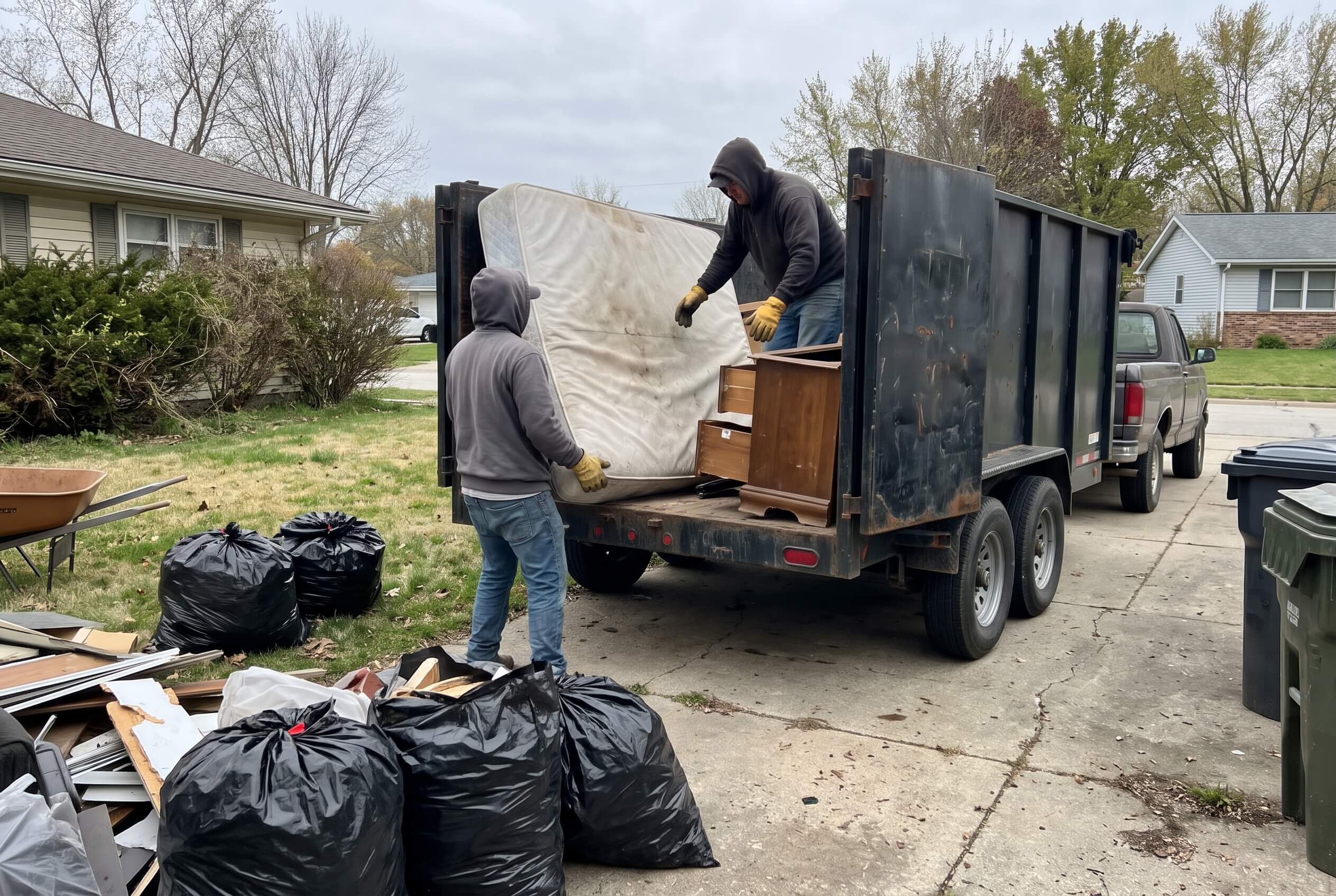
The boxes and furniture in a damp basement can hide the part of the house that needs attention. They also block the route a crew needs to inspect, remove affected materials, and bring equipment in. Clearing the space can reduce duplicated labor, but only when hauling and remediation follow the same plan.
That does not mean emptying everything as quickly as possible. Suspect contents, valuables, chemicals, and damaged finishes need different decisions. Dragging contaminated items through clean rooms to make access easier can create another cleanup problem.
This guide explains how to coordinate junk removal before remediation, where the savings come from, and what should be agreed before loading begins. The benefit is practical: fewer repeated moves, a clearer scope, and less work undone later. It is not a guarantee that every cleanout lowers the total repair bill.
This guide covers:
- The right order starts before loading
- Where costs can be reduced
- Approve salvage and disposal decisions
- Ordinary hauling is not controlled contamination work
- Put the phases in writing
- Avoid expensive shortcuts
The right order starts before loading
Boxes along a wall can conceal wet finishes, while furniture can block equipment routes. That does not mean everything should be carried out immediately.
- Assess access and suspect materials.
- Separate clean, potentially affected, and unsalvageable items.
- Establish protection and the removal route.
- Move approved contents in a controlled manner.
- Reassess exposed building materials.
Assessment and any needed containment come before handling contaminated items, even if hauling occurs before building-material removal.
Where costs can be reduced
Moving the same contents twice wastes labor. So does arriving for removal only to find no usable access. Planning can open routes for measurements, separate contents decisions from repairs, and reveal hidden boundaries before the final scope is approved.
However, access may reveal a larger problem. That can increase necessary work even while reducing wasted handling. We do not promise every cleanout lowers the total bill.
Access changes what the estimator can see
A wall hidden behind shelving may conceal a leak or damage that the initial visit cannot measure. A blocked crawl-space hatch may prevent inspection entirely. Clearing a defined area can let the contractor replace assumptions with a more specific assessment.
Ask what access is actually needed. A whole-house removal may be unnecessary when a safe route and one exposed wall are enough for the next stage. On another project, contents throughout several rooms may need a broader plan because they are affected or block the work.
The clearing scope should name the objective. It might be access for investigation, removal of damaged contents, preparation for a work zone, or a full property cleanout. Our article on hoarding and mold explains why clearing a home can reveal hidden damage. Those are different purchases.
Savings come from avoiding the same work twice
If a removal crew has to shift furniture to reach a wall, then move it again to establish protection, then call a hauler after demolition, the owner pays for repeated handling. Planning the sequence can reduce that duplication.
The same is true of storage. Items approved to remain need an appropriate destination that will not obstruct the next phase. A temporary pile in the hallway can look like progress until it blocks the protected route used for debris.
Ask the teams to agree on the route, staging area, timing, and handoff. Even when one company performs both services, separate the descriptions in the scope so the owner knows which charges concern contents and which concern the building.
The cheapest hauling quote can omit the expensive part
A normal volume-based quote may assume dry household items, easy access, and ordinary disposal. Suspect contamination, heavy material, stairs, specialist waste, or careful sorting can change those assumptions.
Tell the estimator what is known. Send photographs of the room and the access route, not only a close-up of the pile. Explain whether the contents were wet, whether sewage or floodwater was involved, and whether chemicals or other unusual materials may be present.
Do not compare a straightforward driveway pickup with a controlled removal from an occupied basement as if they are the same service. The lower number may describe less work rather than better value.
Empty does not mean repaired
After contents leave, inspect the exposed surfaces before the space is treated as finished. Look at the wall bases, cabinet backing, floor condition, utility areas, and the source of the original odor.
If new damage is found, document it and adjust the next phase. A clear room can reveal a larger problem that was already present. That can increase necessary work even while the coordinated removal saves handling time.
The sensible measure of success is whether access improved and the building work became clearer. Avoid promising a percentage saving that cannot be supported before the condition is known.
Set up the repaired space differently
When the room returns to use, leave inspection access to drains, valves, sump equipment, and hatches. Keep susceptible stored items away from damp surfaces and arrange a storage system that allows problems to be noticed early.
Clearing and repairing are opportunities to make the next leak easier to discover. The best outcome is a space that remains usable and inspectable, rather than one that slowly recreates the conditions the crew just cleared.
Approve salvage and disposal decisions
| Category | Practical approach |
|---|---|
| Unaffected belongings | Protect and stage away from work |
| Suspect hard-surface items | Assess practical cleaning |
| Affected porous contents | Evaluate removal or specialist restoration |
| Valuable papers and heirlooms | Consider qualified restoration advice |
| Chemicals, batteries, and sharps | Appropriate separate waste routes |
Keep identification, legal records, medication, and agreed valuables separate. The authorized decision-maker should approve disposal. Cleanout access does not automatically provide ownership rights over every item.
Ordinary hauling is not controlled contamination work
Shaking fabrics, dry brushing, or dragging suspect furniture through clean rooms can release particles. The EPA's remediation guide uses containment and HEPA vacuums to keep that kind of dust from spreading. Ask how clean and affected items remain separate, what wrapping is appropriate, which routes are protected, and who handles specialist hazards.
The EPA homeowner guide explains why some porous materials cannot be adequately cleaned. Killing growth or masking a smell does not establish a usable item.
Put the phases in writing
Our junk removal service can open access, while remediation addresses the affected assembly. The estimate should distinguish them.
Ask for:
- Volume, access, and loading assumptions.
- Sorting and approval responsibilities.
- Contamination precautions and exclusions.
- Building-material removal and cleaning.
- A documented change-order process.
A hauling quote is not automatically the total repair budget. Disposal, specialist work, and rebuilding may be separate.
Avoid expensive shortcuts
Common mistakes include moving suspect contents without protection, disposing of an insurance loss before recording it, mixing hazardous waste with debris, or closing finishes before correcting water entry. The EPA's household hazardous waste page says to check with your local waste agency for disposal options.
For contaminated flooding, pests, instability, or suspect asbestos, arrange the appropriate assessment. A truck does not address every hazard. Useful milestones are safe access, approved contents handling, a defined building scope, and readiness for repair.
Sorting is part of the work rather than an interruption
A full property does not become a normal hauling job just because a truck has arrived. Someone must decide what stays, what can be donated, what requires specialist handling, and what is approved for disposal. If that decision process is missing, the crew either stops repeatedly or risks removing something the family intended to keep.
Name one authorized decision-maker and a backup contact. Decide how uncertain items will be handled before loading begins. A small review area works better than setting every questionable object aside throughout the house, where it can block the same paths the crew is trying to open.
Use clear categories:
- Keep, with a protected destination agreed in advance.
- Review, for decisions the authorized person has not yet made.
- Donate, only when condition and receiving-outlet rules allow it.
- Dispose, after authorization and with a suitable waste route.
- Specialist handling, for hazards or valuables outside ordinary hauling.
Photographs, financial papers, identification, medication, keys, and repair records deserve a separate procedure. A cabinet that appears empty can still hold important documents behind a drawer. Give the crew enough direction to check the right places without expecting workers to make family or legal decisions.
Know what changes when contamination is involved
Dry household clutter, sewage-affected contents, animal waste, chemicals, and suspect building materials call for different methods. Tell the estimator what is known and identify uncertainty. A volume-only hauling quote may not include the protection or specialist disposal needed once those conditions are discovered.
Do not mix unidentified liquids, batteries, sharps, or chemical containers into ordinary debris bags. Likewise, avoid sending suspect contaminated furnishings to a donation outlet simply because they look valuable. Reuse should not transfer an unresolved problem to another household or a nonprofit.
Ask how clean and suspect contents will remain separate, how the route out of the building is protected, and who investigates exposed damage. If removing furniture reveals a wet wall, stop treating that wall as ordinary cleanup until the condition has been evaluated. Moving contents creates access; it does not establish that the building itself is repaired.
Define the condition you are paying to receive
An empty room, a swept room, a thoroughly cleaned room, and a repaired room are different outcomes. Agree on which one the contract includes. Identify whether fixtures remain, whether drawers and closets are part of the scope, and whether outbuildings are included.
The final walkthrough should happen while questions can still be resolved. Compare the agreed areas with the work completed, confirm approved items left behind, and record any follow-up. Keep the receipt and any relevant disposal or donation documentation.
For a property with an ongoing accumulation problem, arrange practical support after the crew leaves. Clear access to exits, utilities, and washing facilities must remain usable. A manageable storage plan and regular help are more useful than expecting one large removal to settle every underlying difficulty.
How controlled cleanup differs from ordinary demolition
Taking a wet wall out is often necessary. How it comes out matters to the rest of the property. Breaking material apart, dragging it through occupied rooms, and leaving fine debris behind can spread a localized problem beyond the original work area.
Before disturbance, the contractor should define the work boundaries and the protection appropriate to the conditions. The plan may include barriers, controlled access, filtration, and a protected removal route. Equipment and containment should be selected for the project rather than copied from a photograph of another job.
Discuss the practical details before the first cut:
- Which rooms can remain occupied and which must be kept clear?
- Where will workers and debris enter and leave?
- What happens to furniture, clothing, and stored items?
- Does the HVAC arrangement require a specific precaution?
- Who handles a discovery that exceeds the original scope?
- What must be checked before protection is removed?
Porous materials that cannot be adequately cleaned may need removal. Accessible retained materials may be cleaned using appropriate methods. The decision depends on contamination, material condition, and access, not simply whether a surface can be made to look lighter with a chemical.
Source correction must also be assigned. Sometimes the cleanup company performs it; sometimes a plumber, roofer, drainage contractor, or other trade does. The owner needs a clear division of responsibility. Otherwise, the removal crew can finish its contract while the underlying wetting remains nobody's task.
Completion should be more than a photograph
A tidy photograph documents appearance. It does not establish the moisture condition of retained materials, the back of an assembly, or the repair of a concealed source. Agree on the completion criteria before work begins so the final review is checking an outcome both parties understand.
Useful records can include labeled progress photographs, the materials removed, cleaning work completed, drying measurements, and source repairs. Where independent verification is appropriate, decide who conducts it and what it evaluates before the project starts. An outside assessment can be valuable without requiring the same sampling package on every job.
Rebuilding should follow that review. Covering a wall too early makes a later question harder to answer and can hide remaining wetting. A construction deadline should not replace the evidence that the assembly is ready.
After normal use resumes, watch the relevant area again. Check the repaired connection, the room that formerly smelled musty, or the foundation after rain. If the condition returns, investigate the water and material history rather than assuming another surface treatment is the entire answer.
This is why remediation, drying, source repair, and reconstruction should be named separately even when one business coordinates them. They work together, but they solve different parts of the problem. The written scope should show how one phase hands the building to the next.
Frequently Asked Questions
Should I empty the area first?
Move only clearly unaffected belongings when safe. Leave suspect contents for the agreed plan.
Does hauling fix the building problem?
No. It improves access; the source and affected materials still need attention.
Can contaminated furniture be donated?
Do not transfer unsuitable affected items to another household. Assess restoration or disposal.
Is a saving guaranteed?
No. Coordination reduces duplicated effort, but hidden damage can expand the work.
Who decides what is discarded?
The authorized owner or decision-maker should approve the list before loading.
Coordinate the clearing and the cleanup
If contents are blocking a damp wall, a crawl-space hatch, or the route needed for remediation, ask about both services together. We can discuss a sequence that creates access while keeping contents decisions separate from the building work.
Book a visit through our online scheduler or call 502-660-2660 to talk through the property. Inspections and quotes are free. Review our Junk Removal and Mold Remediation pages for more about the relevant services.
Mold Men is based in Louisville and serves the Louisville metro, Owensboro, New Albany, and Jeffersonville. We also handle crawl space encapsulation and vapor barrier replacement when moisture under the floor is part of the problem, along with hoard cleanouts and junk removal when access needs to be restored first.
Every job comes with a written scope before work starts and a written closeout report when it is done. Our referral program pays 15 percent, up to $500, when someone you refer books qualifying work. If you are unsure which service fits, explain the condition when you call and we can discuss the appropriate next step.