
5.0 out of 5 on Google
Read our reviewsThe Mold Men Journal
Mold in Louisville Historic Homes: Old Louisville Guide
Discover mold risks in Old Louisville's historic Victorian homes. Learn detection, prevention, and remediation for this architectural collection in KY.
By Chase Walkup, owner · Published
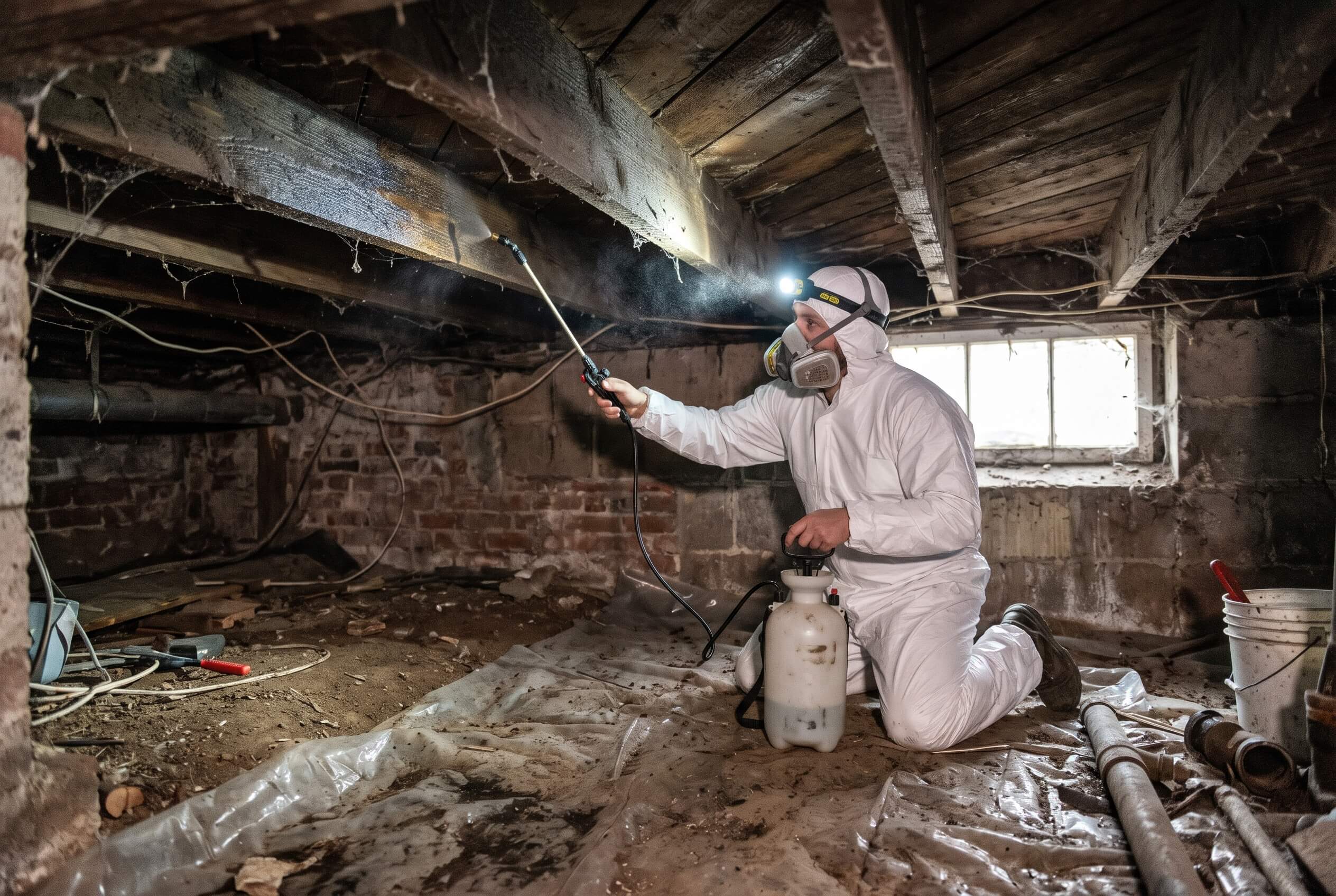
The Short Version
An Old Louisville house can have a stone or brick lower level, original plaster upstairs, and several generations of plumbing and cooling equipment fitted around both. That combination is part of the house's character. It also means a damp stain may involve more than the surface you can see.
The right response is not to treat every old material as disposable or every cellar as beyond repair. It is to understand the water path, identify the affected layers, and choose methods that protect the features worth keeping. A repair that suits a newer wall may be a poor fit for an older assembly.
This guide focuses on historic Louisville homes, including Old Louisville, Limerick, and the older Highlands streets. Across the river, our guide to mold in historic New Albany covers Mansion Row and East Spring Street. It covers foundations, concealed finishes, salvage decisions, disturbance precautions, and the questions to ask before a crew starts opening walls. The goal is a dry, usable house with its character intact wherever practical.
This guide covers:
- Assess the structure, not its birthday
- What stone foundations need
- Why finished areas conceal damage
- Protect older finishes before disturbing them
- Make salvage decisions specific
- Prevent recurrence at the source
Assess the structure, not its birthday
A Victorian property near Central Park can differ from a bungalow in Germantown. Old Louisville 40203, the Highlands in 40204 and 40205, and Schnitzelburg 40217 contain varied assemblies and repair histories.
For a historic home, ask:
- When does water appear?
- Which alterations changed drying pathways?
- Do finishes conceal damaged layers?
- Which original details need documentation?
Neighborhood identity supplies context, rather than a diagnosis for every address. The National Park Service's Preservation Brief 39 puts it this way: "Avoid remedial treatments without prior careful diagnosis."
What stone foundations need
Below-grade masonry can receive water through openings, joints, or contact with wet soil. An interior coating may hide symptoms without correcting the outside source. The wall and existing mortar should be assessed before a repair method is chosen. The University of Minnesota Extension recommends sloping soil away from the foundation at least 1 inch per foot for 6 feet.
Check drainage, downspout discharge, ground slope, window wells, sump operation, and condensation. White deposits may be mineral salts. Dark marks can have several causes. Appearance alone is not a repair specification.
Age explains the materials rather than proving the problem
An older house can perform well when drainage, maintenance, and repairs suit it. A younger renovation can fail quickly when a damp foundation is enclosed without understanding how it behaves. Evaluate the actual assembly rather than treating the construction date as a diagnosis.
Ask what was changed over time. Was a cellar finished? Were walls insulated or paneled? Was central cooling added? Does a newer bathroom have an appropriate exhaust path? Those alterations may introduce moisture or conceal a condition that was once visible.
The history helps the contractor choose where to look. Original plaster beside a newer wallboard patch can tell a different story from a uniformly original room. Keep photographs and repair records available if the changes were recent.
Water can damage the newest layer first
A masonry foundation may tolerate some moisture differently from the stud wall, paper-faced board, and insulation placed in front of it. The owner sees the finished room, while the vulnerable surfaces sit behind it.
This is why a basement that looks attractive can still need careful investigation. Ask whether the finishes allow inspection and whether the planned correction addresses the water before new materials are installed. A coating on the visible side should not be assumed to solve every path of wetting.
For recurring masonry concerns, use a specialist familiar with the material. The remediation crew should know when source or structural repairs belong to another trade.
Protecting character starts before demolition
Make a room-by-room record of original trim, flooring, plaster details, doors, and built-in features near the work. Decide which items will be protected in place and which can be removed safely for access.
If cutting, sanding, or demolition may disturb older layers, arrange appropriate evaluation of other potential hazards. The presence of an old finish is a reason to assess it, not a reason to declare its composition from appearance.
Ask how debris moves through the property. A narrow stair, original floor, or tight landing can affect the removal method. The plan should protect adjacent features as well as control contamination.
Salvage should be a specific decision
Some retained materials can be cleaned and repaired. Others are too damaged or inaccessible for a sensible salvage plan. Ask for the reason in each case rather than accepting a blanket promise to save everything or a blanket recommendation to remove it all.
Where a valuable feature needs restoration advice, involve the relevant specialist. The owner should know whether that service is included, referred, or excluded from the removal contract.
Check local requirements for visible work
Historic-district controls and construction requirements can affect exterior changes and other proposed work. Confirm the address-specific requirements with the appropriate Louisville Metro office before authorizing work that may need review. Interior microbial cleanup and exterior alterations should not be assumed to have the same approval path.
Good planning lets the environmental work and the preservation work support one another. The house needs the cause corrected, the affected materials addressed, and a repair suited to the assembly that remains.
Why finished areas conceal damage
Framing and paper-faced panels beside a wet assembly may stay damp behind an acceptable-looking face. A small stain does not establish the full boundary, and an odor does not identify a species.
The EPA homeowner guidance supports finding the source and addressing materials appropriately. Access should be explained rather than defaulting to wholesale demolition.
| Location | Assessment priority |
|---|---|
| Foundation wall | Exterior drainage and wall condition |
| Bathroom cavity | Plumbing and exhaust routing |
| Attic framing | Roof entry and trapped exhaust |
| Built-in cabinetry | Hidden contact surfaces and airflow |
| Floor assembly | Wet layers and structural condition |
Protect older finishes before disturbing them
Lead paint and asbestos are separate hazards. A cleanup company should not be assumed qualified for every material because it offers removal services.
The EPA asbestos guidance explains why suspect materials need care before disturbance. Painted surfaces in pre-1978 housing can also involve lead-safe requirements.
Before cutting:
- Identify the material and intended disturbance.
- Determine whether specialist assessment is needed.
- Confirm containment and disposal.
- Separate specialist work from ordinary hauling.
Check local approval requirements for protected features or exterior changes. Preserving a building does not mean leaving wetting untreated; it means choosing repairs appropriate to the assembly and requirements.
Make salvage decisions specific
Sound accessible framing or hard finishes may be cleanable. Some damaged porous materials need removal. Access, deterioration, and contamination depth matter more than an item's appearance or cost.
A scope should distinguish retained materials, removal boundaries, further investigation, repairs before closure, and exclusions. Photograph decorative profiles before removal. Specialized plaster or joinery work may require a separate craftsperson afterward.
Prevent recurrence at the source
Fix drainage before relying on equipment to manage the result. Keep contents away from damp surfaces and revisit the area after repairs and subsequent rainfall. Do not close an assembly because its face feels dry.
Our Louisville page explains coverage, and our controlled cleanup service describes protection and handling.
An older assembly needs a repair that fits it
Historic houses often combine original materials with several generations of repair. A stone foundation may support newer framing. Plaster can sit beside paper-faced wallboard added during a later renovation. A bathroom, cooling system, or finished basement may introduce water and temperature conditions the original rooms never had.
Assess the assembly that is present rather than assuming every old house needs the same treatment. Identify the wall layers, the path of wetting, and what can be reached without unnecessary damage. A well-preserved original finish deserves a specific salvage discussion, while a badly damaged later addition may have a different practical answer.
Before disturbance, ask for:
- Photographs and a description of the original and replacement materials.
- The reason an opening is needed and its proposed boundary.
- Protection for adjacent plaster, trim, floors, and built-in features.
- An assessment of other potential hazards before cutting or sanding.
- The trade or specialist responsible for repair after cleanup.
- Any local approval needed for work affecting regulated historic features.
Do not assume age alone proves that a material contains asbestos or lead. Do not assume a surface is safe to disturb because it looks like a newer product either. Appropriate assessment is especially important when the work will cut through layers installed at different times.
Keep the foundation visible enough to understand
A finished wall can make a damp lower level feel like living space while hiding the surface that needs inspection. Our guide to what a real mold inspection includes explains how that is checked. Cabinets, insulation, paneling, and stored contents also make it harder to see the recurring path of water. The right question is whether the assembly can remain dry under its actual conditions, not whether it can be covered neatly.
Exterior corrections deserve the same care. Gutter discharge, grade, flashing, and masonry repairs interact with the building. A coating or patch should not be chosen only because it looks waterproof. Ask how it changes moisture movement and whether it is appropriate for the material being repaired.
A specialist familiar with older masonry may be needed for deteriorated mortar or recurring seepage. Remediation does not replace structural repair, and an environmental contractor should be clear about work that belongs to another trade.
Save the evidence before new finishes close the opening
Keep photographs of cleaned retained framing and the repaired source. Record why materials were retained or removed, particularly when the choice affects original features. Those records help a future owner or contractor understand a repair without reopening the same area simply to learn what happened.
Then observe the building through the condition that caused the problem. A roof repair should be reviewed after weather. A humidity correction should be checked during warm months. An old house does not need to be treated as fragile beyond repair. It needs a diagnosis and methods that respect how its materials actually work.
Learn which kind of water problem you have
Water reaching a building from the ground, rain entering from above, a plumbing failure, and condensation can leave similar-looking damage. They require different corrections. Before buying equipment or authorizing a coating, look at when the condition changes.
Does the smell increase after rain? Does a stain appear after the upstairs bathroom is used? Does the underside of ductwork become wet during warm weather? Does the basement remain damp even during a dry week? These observations do not complete the diagnosis, but they give the assessment a useful starting point.
In the Ohio River valley, the same home can have more than one source. A downspout may wet the foundation while summer air condenses on cooler surfaces downstairs. Fixing one reduces the problem without necessarily solving the other. Ask for evidence that the proposed correction addresses the source actually present at the property.
| Pattern | What to investigate | What not to assume |
|---|---|---|
| Wetting after rain | Roof, flashing, grade, gutters, drainage | Every stain is a plumbing leak |
| Wetting after appliance use | Supply, drain, pan, hose, connection | Turning the appliance off dried the assembly |
| Condensation on cool surfaces | Temperature, humidity, insulation, airflow | More outdoor air will always help |
| Persistent dampness below grade | Ground contact, drainage, vapor, materials | A dehumidifier repairs liquid entry |
| A returning localized stain | Concealed source and prior repair | Paint failure is the whole problem |
A dehumidifier manages moisture in air. It does not divert water running against the foundation or repair a leaking shower drain. Its drain arrangement, capacity, and maintenance still matter. A full collection bucket or blocked hose can stop useful operation while the owner assumes the unit is protecting the space.
Keep a small record through a real week of use
One humidity reading taken during an appointment may miss the condition that matters. Record the room, time, weather, and whether the heating or cooling system is operating. Note visible condensation and odors at the same time. Patterns are easier to explain when the observations are written down.
Keep storage away from damp surfaces and leave access to valves, drains, sump equipment, and inspection hatches. This is partly prevention and partly visibility. A problem hidden behind thirty boxes can continue for months before anybody notices it.
Walk the exterior after rain when conditions are safe. Look for overflowing gutters, discharge against the house, and water collecting where it should drain away. Avoid major excavation or changes to neighboring drainage based on a quick look. Those need a proper design and, where applicable, the relevant approvals.
The goal is a building that can stay dry under ordinary use and weather. Cleaning, equipment, and new finishes should support that goal. If the plan removes a stain but nobody can explain why it will stop returning, the investigation is not finished.
Frequently Asked Questions
Are century-old properties inevitably affected?
No. Persistent wetting matters more than age alone.
Should masonry always be sealed inside?
No. Assess the source and assembly before choosing a coating or drainage repair.
Can original woodwork be retained?
Sometimes. Condition, access, and practical cleaning limits guide the decision.
Does an odor justify total demolition?
No. Removal boundaries need evidence and appropriate investigation.
Are lead and asbestos automatically included?
No. Confirm separate qualifications, assessment, and scope for those hazards.
Protect the house by finding the source
If an older Louisville home has a recurring ceiling stain, damp lower level, or a concealed condition behind finishes, have it assessed before another cosmetic repair. Tell us which original materials matter to you so protection and salvage can be discussed at the start.
Book a visit through our online scheduler or call 502-660-2660 to talk through the property. Inspections and quotes are free. Review our Louisville and Mold Remediation pages for more about the relevant services.
Mold Men is based in Louisville and serves the Louisville metro, Owensboro, New Albany, and Jeffersonville. We also handle crawl space encapsulation and vapor barrier replacement when moisture under the floor is part of the problem, along with hoard cleanouts and junk removal when access needs to be restored first.
Every job comes with a written scope before work starts and a written closeout report when it is done. Our referral program pays 15 percent, up to $500, when someone you refer books qualifying work. If you are unsure which service fits, explain the condition when you call and we can discuss the appropriate next step.